The Solsonès is one of Catalonia's most sparsely populated counties, a peaceful region of rolling hills and endless cereal fields that shares its southwestern border with the Berguedà. Think of it as the rural heartland of central Catalonia—similar to remote areas of central Spain or southern France, but with distinctly Catalan character. From La Tor de Montclar, you can reach the capital city Solsona in about 45 minutes, making it an easy day trip for those seeking authentic rural Catalonia.
Understanding Comarques: Catalonia's County System
Before exploring the Solsonès, it helps to understand what a comarca is. Similar to a county in the UK or US, or a département in France, comarques are administrative divisions that group together municipalities sharing geography, history and culture. Catalonia has 41 comarques, each with its own identity and capital city.
The Solsonès comarca covers roughly 1,000 square kilometres with fewer than 14,000 inhabitants—making it one of the emptiest regions in Catalonia, comparable to rural areas of Umbria in Italy or Extremadura in Spain in terms of population density.
Solsona: A Complete Medieval City
Solsona, the county capital, is a remarkably well-preserved medieval city of about 9,000 inhabitants. The entire old quarter sits within medieval walls punctuated by defence towers. At its heart stands the Cathedral of Santa Maria, a 12th-century Romanesque-Gothic building whose bell tower dominates the skyline.
The Episcopal Palace houses the Diocesan and County Museum, which holds one of Catalonia's most important Romanesque art collections—comparable to the Cloisters in New York or the Romanesque collection at Barcelona's MNAC. Medieval altar frontals, painted wooden sculptures and religious manuscripts fill the galleries.
Solsona is also famous for its Carnival, declared a heritage festival of national interest. The celebration features unique characters like the "crazy giants" and the ritual "hanging of the donkey"—traditions dating back centuries that have no equivalent elsewhere.
Landscape and Natural Environment
The Solsonès stretches between the Pre-Pyrenees mountains to the north and the Central Depression plains to the south, with elevations averaging around 700 metres (2,300 feet). The Cardener River flows south through the region, carving fertile valleys surrounded by Scots pine forests.
Key natural areas include:
- Vall de Lord (Lord Valley): A mountainous northern zone centred on Sant Llorenç de Morunys, excellent for hiking. The landscape resembles parts of the French Massif Central—remote, forested, and peaceful.
- Olius: Home to a stunning Romanesque complex including the church of Sant Esteve and a monumental cemetery unique in Catalonia.
- Port del Comte: A ski resort straddling the Solsonès and Alt Urgell with 40 kilometres of runs—smaller than major Alpine resorts but family-friendly and uncrowded.
Romanesque Heritage and Rural Culture
The Solsonès countryside is dotted with exceptional Romanesque churches, many dating from the 11th-12th centuries. Sant Esteve d'Olius, with its distinctive bell tower, Santa Maria de Solsona, and Sant Pere de Graudescales are essential stops for medieval art enthusiasts—think of them as the rural equivalents of the famous Romanesque churches of Tuscany or Provence.
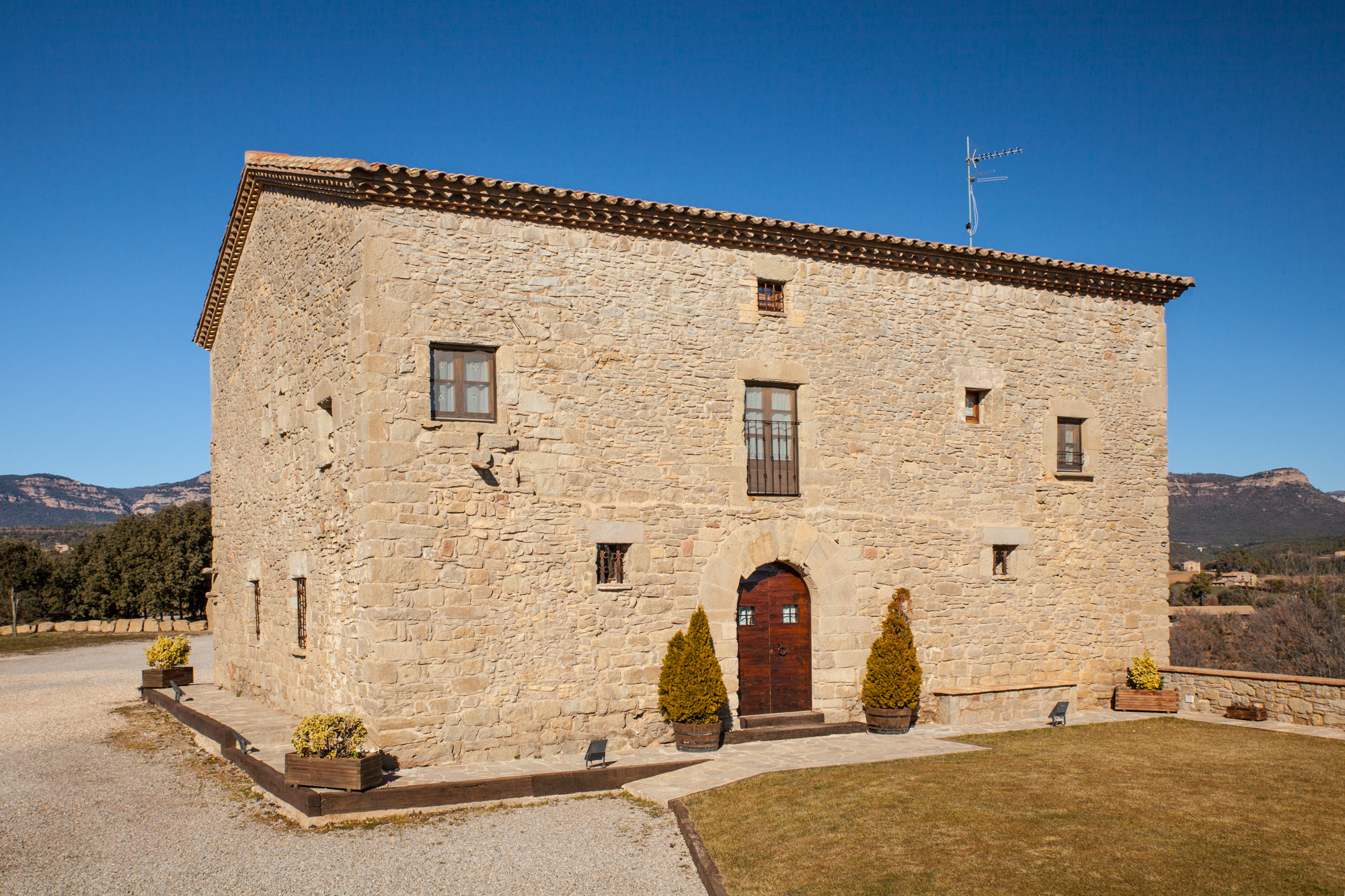
The agricultural landscape defines the Solsonès identity. Traditional masies (fortified farmhouses) sit scattered among wheat and barley fields—a scene reminiscent of the Castilian meseta or rural Provence, but with characteristic Catalan stone architecture.
Traditional fairs and markets maintain the connection between land and local products. The Fira de Sant Isidre celebrates regional produce: artisan cheeses, cured meats (especially llonganissa sausage), honey, and mushrooms in autumn.
Excursions from La Tor de Montclar
The Solsonès and Berguedà share a natural border and centuries of common history. The C-26 road connects both comarcas directly. From La Tor de Montclar, you can reach Solsona in approximately 45 minutes, making it perfect for a half-day or full-day excursion.
Both regions belong to central Catalonia and share cultural traditions like the pastorets (traditional Christmas nativity plays), peasant agricultural culture, and mountain gastronomy deeply rooted in the territory. You could easily combine a morning exploring Solsona's cathedral and museum with an afternoon drive through the Lord Valley, or spend a winter day skiing at Port del Comte before returning to La Tor for the evening.
Recommended itinerary: Visit Solsona's cathedral and Episcopal Museum (2 hours), lunch at a traditional restaurant serving local cured meats and beans, then drive to Olius to see the Romanesque church complex (1 hour). Return via scenic back roads through wheat fields and pine forests.
Practical Information for Visitors
Best time to visit: Spring (April-June) for wildflowers and green landscapes; autumn (September-October) for mushroom season and harvest colours; winter for snow sports at Port del Comte.
What to bring: Comfortable walking shoes for cobblestone streets, camera for architectural details, and an appetite for hearty mountain cuisine.
Local specialties to try: Llonganissa de Solsona (local sausage), artisan cheeses, honey, and traditional bean stews. Solsona has several excellent restaurants serving authentic regional cuisine.
Getting there: From La Tor de Montclar, take the C-26 west toward Solsona (approximately 45 minutes). Public transport is limited; a car is recommended.
Practical information
45 minutes by car to Solsona
Discover Berguedà from La Tor de Montclar
15th-century farmhouse with indoor pool, ideal for groups of up to 20 guests
Check availability