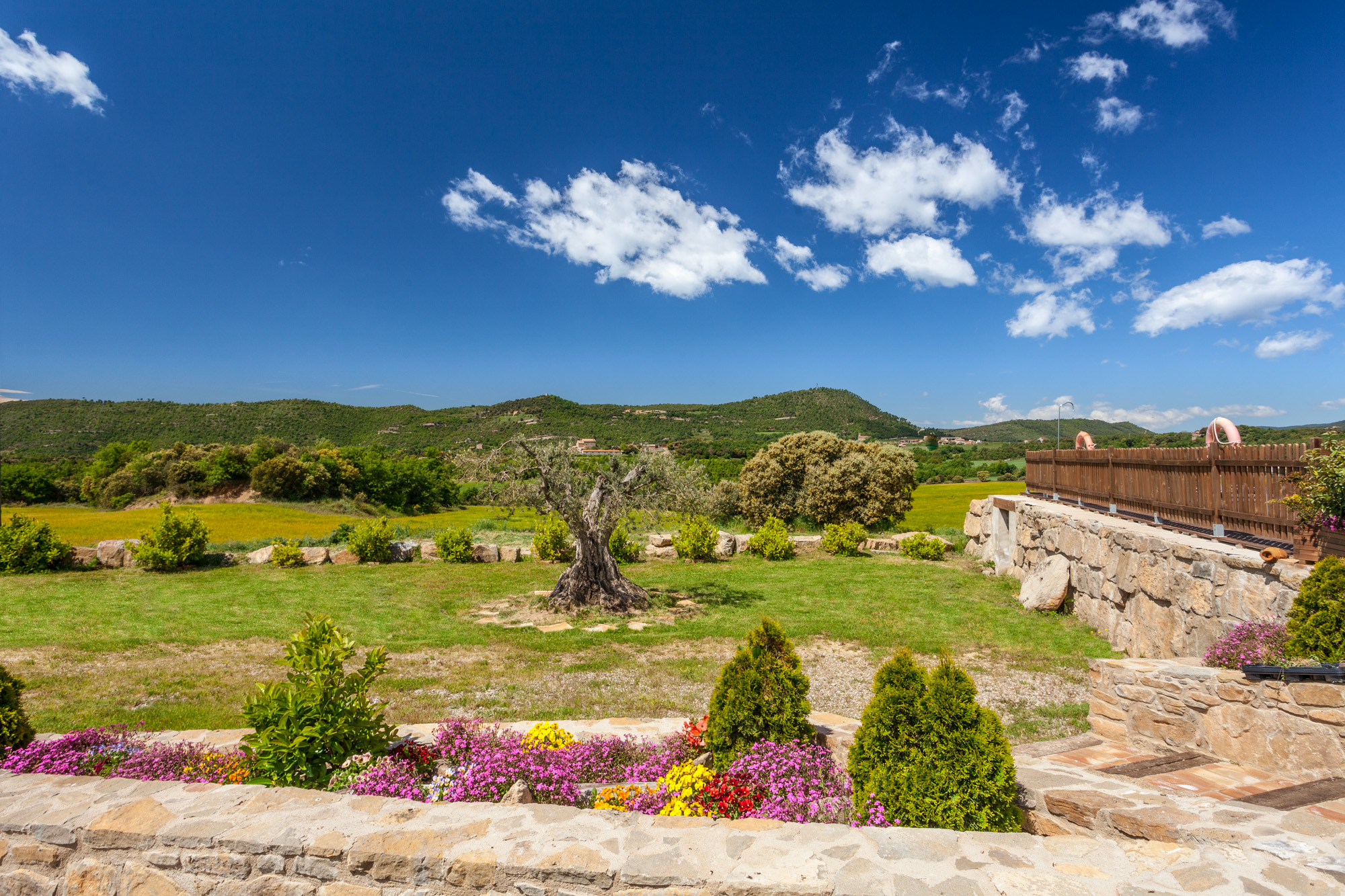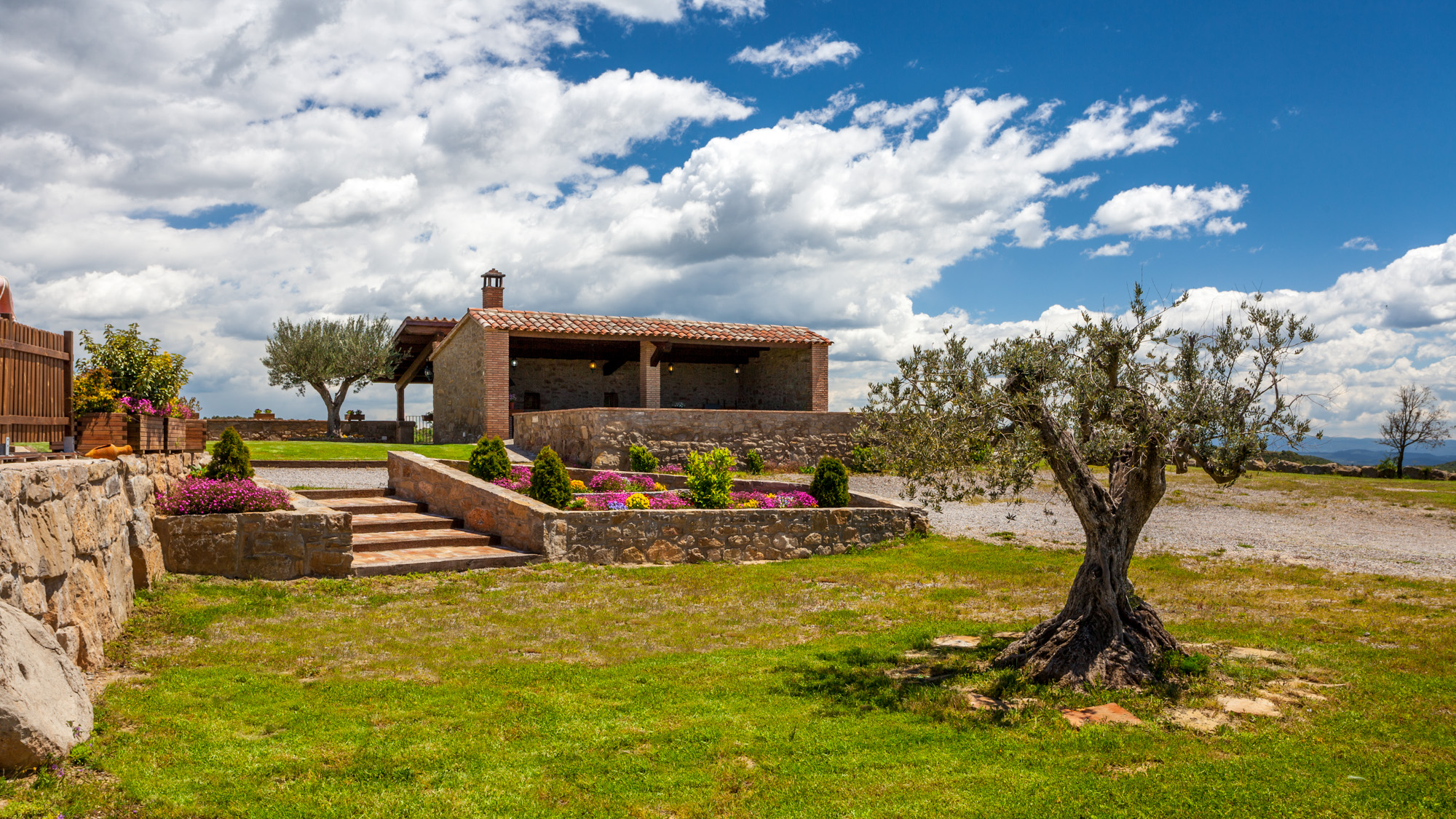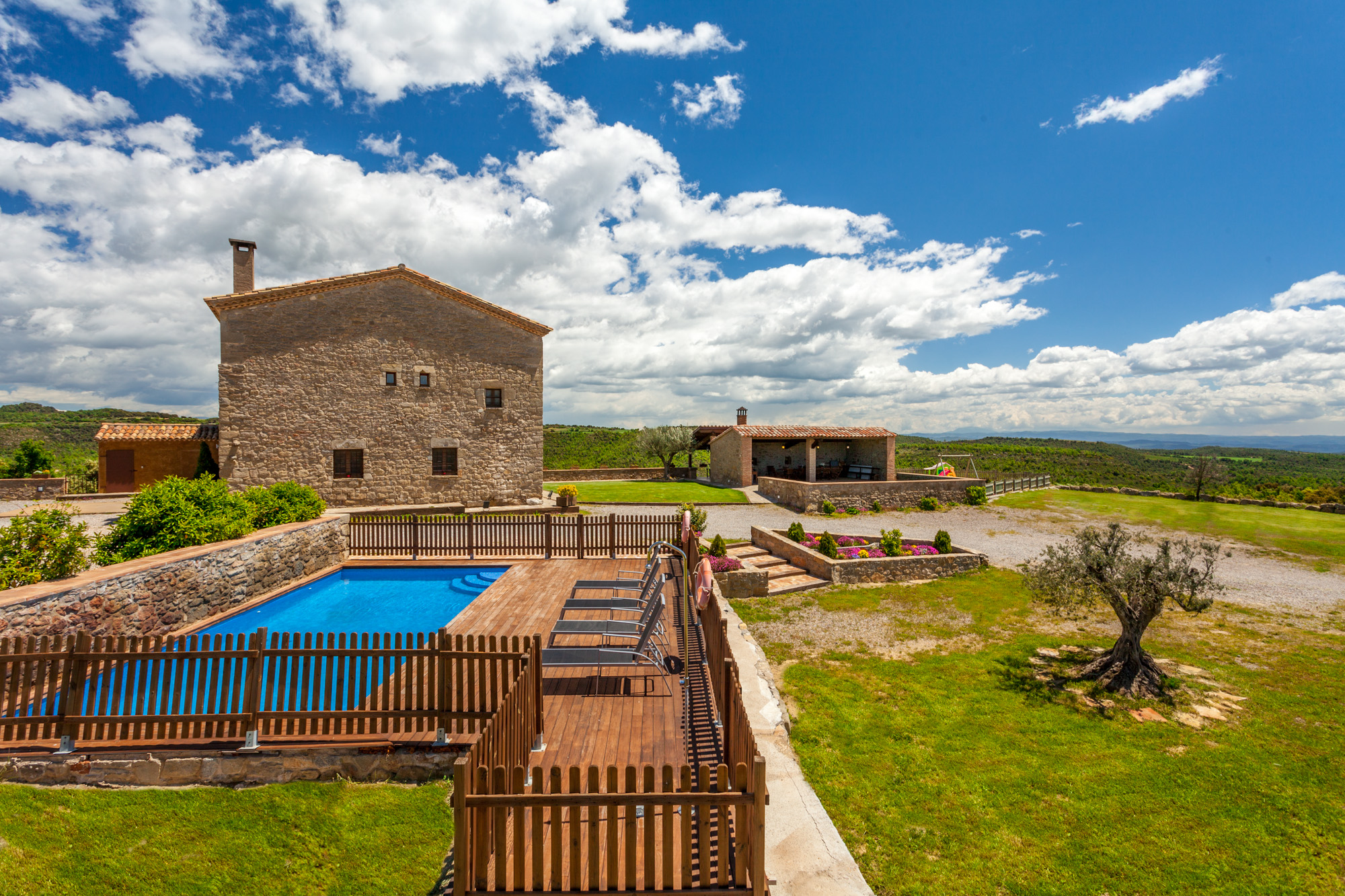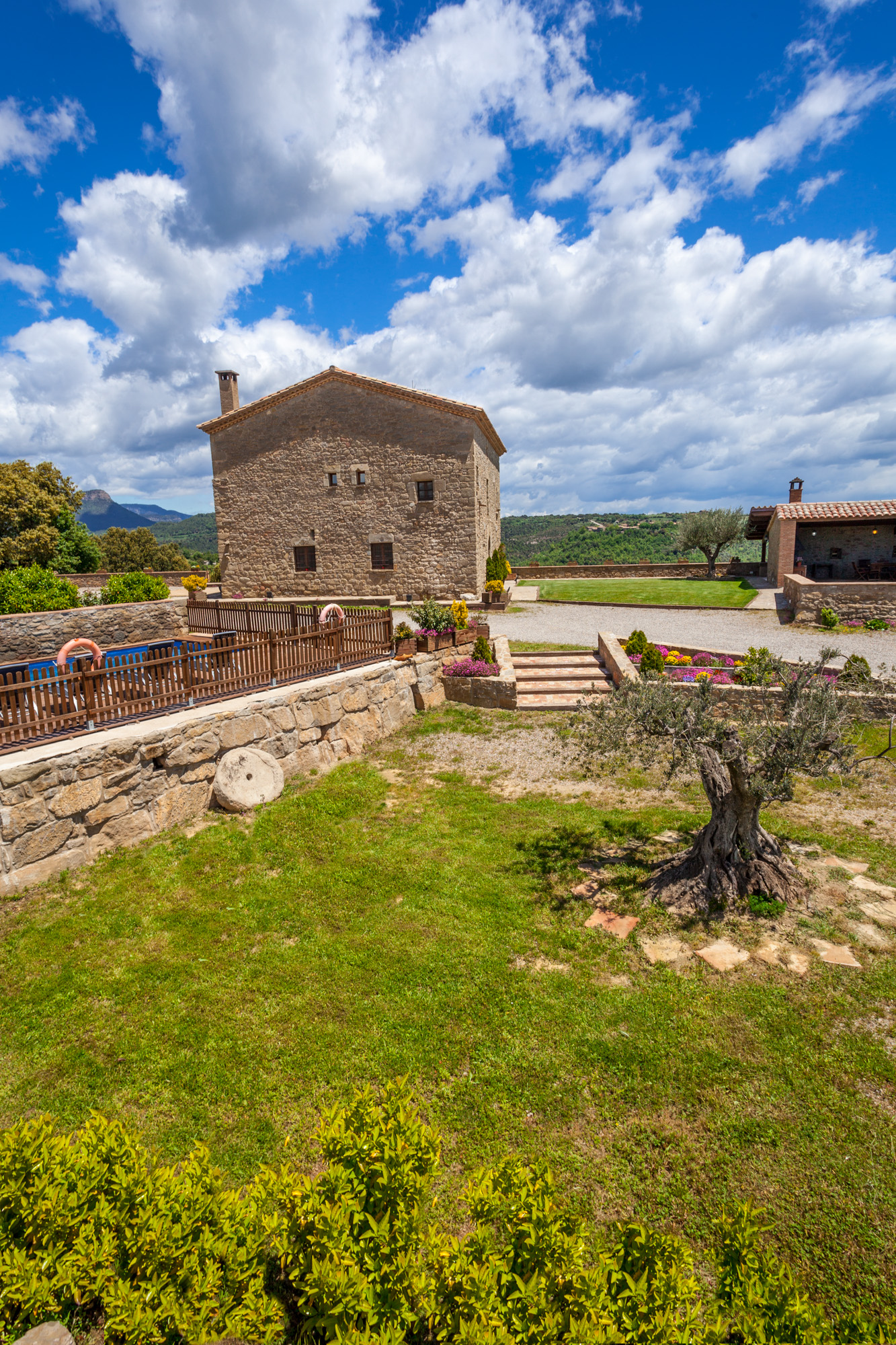
The Berguedà landscape is inseparable from its traditional rural architecture: stone masies (farmhouses), dry-stone walls, terraced fields and shepherds' huts that have shaped the countryside for centuries. La Tor de Montclar itself is a restored example of this living heritage.
The Catalan Masia: Architecture and Function
The masia is the quintessential Catalan rural building: a stone farmhouse that served as both residence and agricultural centre. Masies typically feature:
Stone construction: Walls built from local stone (limestone or sandstone) cut into rough blocks and laid with lime mortar. Walls are often 50-70 cm thick, providing thermal mass that keeps interiors cool in summer and retains heat in winter.
Gabled roof: A two-slope roof (teulada a dues aigües) covered with curved terracotta tiles (teules àrabs). The roof is oriented to shed rain and snow efficiently.
South-facing orientation: The main façade typically faces south (solana) to maximise sunlight and warmth, while the north side (obaga) has fewer, smaller windows to minimise cold winds.
Multiple storeys: The ground floor housed livestock and stored tools and crops; the first floor contained living quarters (kitchen, bedrooms, main room); the attic (golfes) stored hay and grain. This vertical organisation reflected the integrated, self-sufficient nature of traditional farming.
Large entrance: A central portal (portalada) wide enough for carts and animals to enter, leading to the ground-floor stable and storage areas.
Masies range from modest single-family structures to large, multi-generational complexes. Many date from the 17th to 19th centuries, though some have medieval foundations. They were built to last, using time-tested techniques passed down through generations of masons and carpenters.
Dry-Stone Constructions: Walls, Terraces and Huts
The mountains of the Berguedà are crisscrossed with dry-stone walls (marges or parets de pedra seca)—walls built without mortar, relying on the careful placement and interlocking of stones. These walls serve multiple functions: marking property boundaries, retaining soil on terraced fields, and providing windbreaks for crops and livestock.
Building dry-stone walls requires skill and experience. The mason selects stones of appropriate size and shape, fits them tightly together, and often includes larger "through stones" that stabilise the wall. A well-built dry-stone wall can stand for centuries, flexing with ground movement and shedding water through gaps between stones.
In 2018, UNESCO inscribed "The Art of Dry Stone Walling" on its Representative List of Intangible Cultural Heritage, recognising it as a traditional craft at risk of disappearing. Catalonia, including the Berguedà, was part of this multinational inscription.
Barraques de pastor (shepherds' huts): Small, circular or rectangular stone huts built by shepherds as temporary shelters in high pastures. Constructed entirely of dry stone, with corbelled roofs (stones laid in overlapping courses to form a dome), these huts are marvels of vernacular engineering. Many still stand in the mountains around Montclar, silent witnesses to centuries of pastoral life.
Terraced fields: On steep slopes, farmers created level terraces (feixes) supported by dry-stone walls. This maximised arable land, reduced erosion and allowed cultivation of cereals, vegetables and vines. Though many terraces are now abandoned as agriculture declines, they remain a defining feature of the Berguedà landscape.
Materials, Techniques and Craftsmanship
Traditional Berguedà architecture used locally sourced materials: stone from nearby quarries or gathered from fields, timber from surrounding forests (oak, pine, chestnut), lime for mortar (burned in small kilns), and clay for roof tiles (fired in local kilns). This reliance on local resources meant buildings were perfectly adapted to their environment—both climatically and aesthetically.
Roofs employed wooden structures: beams (bigues) spanning the width of the building, topped with smaller joists (cairats) and finished with tiles. Chestnut wood, resistant to rot and insects, was prized for beams. Interior walls were sometimes plastered and whitewashed; more often, the stone was left exposed.
Masons (mestres de cases) and carpenters (fusters) were skilled craftsmen, often working within family trades. Construction techniques were learned through apprenticeship, passed from father to son. The lack of written plans meant builders relied on practical knowledge, experience and a deep understanding of materials and structural principles.
La Tor de Montclar: A Restored Masia
La Tor de Montclar exemplifies the restored traditional masia. Originally a farmhouse serving the agricultural lands around Montclar village, it has been carefully renovated to provide modern comfort while preserving historical character. Key features include:
Stone walls: The original thick stone walls have been preserved, cleaned and repointed where necessary. They provide excellent insulation and a sense of solidity and permanence.
Wooden beams and ceilings: Exposed wooden beams in the main rooms and bedrooms showcase traditional carpentry. The wood, often centuries old, adds warmth and texture.
Terracotta floors and tiles: Traditional terracotta tiles (rajoles) on floors and the roof maintain authenticity.
Adaptive reuse: Spaces once used for livestock and storage have been converted into comfortable living areas, kitchens and bathrooms, while respecting the building's original layout and proportions.
Staying at La Tor offers guests a tangible connection to Catalonia's rural past, sleeping within walls that have sheltered generations of farmers, hearing the same winds that whistled through the eaves for centuries, and waking to views that have changed little over time.
Exploring Rural Architecture in the Area
The countryside around Montclar is dotted with masies, many still inhabited and working farms, others converted to rural tourism accommodation or left abandoned. Walking the local trails, you'll encounter:
Active farms: Where traditional buildings coexist with modern agricultural equipment. Respect private property, but farmers are often friendly and willing to chat about their buildings and land.
Abandoned masies: Poignant ruins testifying to rural depopulation. Many were abandoned in the mid-20th century as mechanisation reduced the need for agricultural labour and young people migrated to cities. Exploring these ruins (carefully and respectfully) offers insights into past ways of life—stone mangers, bread ovens, threshing floors.
Restored masies: Increasing numbers of old farmhouses have been restored as holiday homes or rural guesthouses, preserving architectural heritage while adapting to new uses. This trend, sometimes called "rural gentrification," is controversial but has undeniably saved many buildings from collapse.
Dry-stone walls and terraces: Every hillside walk reveals centuries of agricultural labour frozen in stone. Take time to examine the craftsmanship—the careful fitting of stones, the drainage channels, the integration with the natural topography.
Workshops and courses: Some organisations offer dry-stone walling workshops, teaching traditional techniques. Check with the Berguedà tourist board for schedules and availability.
Practical information
Free (outdoor exploration)
Walking tours: half-day to full day
Easy to moderate (depends on hiking trail)
Year-round; spring and autumn ideal for walking
0 km (the house itself is the heritage)
Discover Berguedà from La Tor de Montclar
15th-century farmhouse with indoor pool, ideal for groups of up to 20 guests
Check availability