The Berguedà comarca preserves one of Catalonia's richest concentrations of Romanesque architecture and art. From the pre-Romanesque origins of Sant Quirze de Pedret to the architectural perfection of Sant Jaume de Frontanyà, the region offers an extraordinary journey through medieval religious art spanning four centuries.
Romanesque Art: Context and Characteristics
Romanesque art flourished in western Europe from roughly 1000 to 1200 CE, following the Carolingian period and preceding the Gothic. The name "Romanesque" reflects the style's roots in Roman architecture: rounded arches, barrel vaults and massive stone walls. In Catalonia, Romanesque developed distinctive regional features, notably Lombard arcading—decorative blind arches on exterior walls—introduced by master masons from northern Italy.
Romanesque churches served as refuges, community centres and expressions of faith in an era of feudalism, pilgrimage and the slow reorganisation of society after the collapse of the Roman Empire. Their thick walls and small windows created dim, mystical interiors, conducive to prayer and contemplation. The sculpture and painting that adorned them—stern-faced saints, apocalyptic visions and Christ in Majesty—emphasised Christian doctrine in an age of widespread illiteracy.
The Berguedà, reconquered from Muslim rule in the 9th century, saw a surge of church building as Christian communities re-established themselves. Many Romanesque churches incorporate earlier pre-Romanesque elements, reflecting the continuity of religious life through turbulent centuries.
Key Romanesque Sites in the Berguedà
Sant Quirze de Pedret (Cercs): Dating from the 9th century with 10th-century extensions, this is one of Catalonia's most important pre-Romanesque churches. Its horseshoe arches reflect Mozarabic influence, and its 10th-12th-century frescoes (now in museums) are among the oldest in the region.
Sant Jaume de Frontanyà: Built in the 11th century, this church is celebrated for its Greek cross plan and central dome on squinches—a rare design in Catalan Romanesque. The Lombard arcading on the exterior and the harmonious proportions make it an architectural masterpiece.
Monestir de Sant Llorenç de Morunys (Solsonès, border with Berguedà): A 10th-century monastery with a Romanesque church featuring barrel vaults and a beautiful polychrome Virgin. The cloister and medieval walls add to the site's significance.
Santa Maria de Lillet (La Pobla de Lillet): An elegant 12th-century church with a single nave, apse with Lombard arcading, and a bell tower. The interior preserves fragments of Romanesque frescoes.
Sant Vicenç de Rus (near Bagà): A small but perfectly proportioned 11th-century church in a bucolic mountain setting, exemplifying rural Romanesque architecture.
Dozens of other parish churches, hermitages and chapels dot the Berguedà, many accessible via scenic mountain roads and hiking trails. The density of Romanesque heritage makes the region ideal for architectural enthusiasts.
Wall Paintings and Sculpture
Romanesque churches were originally ablaze with colour. Interior walls, apses and vaults were covered in fresco paintings depicting biblical scenes, saints and the Last Judgment. The Berguedà's wall paintings are among the oldest and most artistically significant in Catalonia.
The Pedret paintings (10th century) include the famous Orant, a praying figure, and mounted warriors. These frescoes, with their hieratic style and vivid mineral pigments, are now preserved at the Diocesan Museum of Solsona and the Museu Nacional d'Art de Catalunya (MNAC) in Barcelona. Other churches' paintings were also removed in the early 20th century to protect them from deterioration, leaving many churches with modern reproductions in situ.
Romanesque sculpture includes carved capitals, portals and, most famously, polychrome wooden statues of the Virgin Mary (Madonnas) and Christ. These statues, known as "Majestats" (Christ) or "sedes sapientiae" (Virgin as Throne of Wisdom), were central to medieval devotion. Many survive in museums, though some remain in their original churches. The craftsmanship—delicate carving, gilding and pigmentation—reveals the skill of medieval artisans.
Planning a Romanesque Route
The Berguedà's Romanesque sites can be explored in thematic day trips or a multi-day circuit. Here are suggested itineraries:
Day 1: Southern Berguedà (from Montclar): Start at Sant Quirze de Pedret (20 min, 20 km; guided tour essential, book via Cercs Mining Museum). Continue to Santa Maria de Lillet in La Pobla de Lillet (30 min from Pedret). Combine with the Jardins Artigas (Gaudí gardens) in La Pobla for architectural contrast.
Day 2: Northern Berguedà: Visit Sant Jaume de Frontanyà (25 km from Montclar, 30 min; check opening times in advance). Proceed to Sant Vicenç de Rus near Bagà (another 15 min). Finish in Bagà to visit the Medieval Centre and Visitor Centre for the Cadí-Moixeró Natural Park.
Extended circuit: Add Sant Llorenç de Morunys (40 km from Montclar, 40 min) for a comprehensive tour covering pre-Romanesque, early Romanesque and high Romanesque periods.
The Berguedà and Solsonès tourist boards offer downloadable maps and guides to Romanesque routes. Many churches have irregular opening hours, so call ahead or visit on weekends when they're more likely to be accessible. Local tourist offices can arrange guided tours and provide keys for normally locked churches.
Museums and Interpretation
To fully appreciate the Berguedà's Romanesque heritage, complement your church visits with museums:
Museu Nacional d'Art de Catalunya (MNAC), Barcelona: The world's finest collection of Romanesque art, including frescoes, altarpieces and sculpture from Catalan churches. The Pedret paintings and many other Berguedà pieces are displayed in reconstructed church apses, allowing you to experience their original context.
Museu Diocesà i Comarcal de Solsona: Closer to the Berguedà (about 40 minutes from Montclar), this museum holds Romanesque works from the Solsonès and northern Berguedà, including sculptures, textiles and liturgical objects.
Centre Medieval de Bagà: A small museum in Bagà's medieval town, offering context on the region's medieval history, the Cathars and Romanesque heritage.
These museums provide the historical, artistic and theological context that brings the rural churches to life, explaining symbolism, construction techniques and the social role of medieval art.
Practical Tips for Exploring Romanesque Heritage
Timing: Churches are often locked outside service times. Weekends, especially Saturday and Sunday mornings, offer better access. Many parishes post contact numbers on church doors; a polite phone call can often arrange a viewing.
Respectful visiting: These are active places of worship, not just tourist sites. Dress modestly, speak quietly, and avoid flash photography. Small donations are appreciated and support maintenance.
Combine with nature: Many churches are in stunning natural settings. Sant Vicenç de Rus, Sant Jaume de Frontanyà and others offer excellent short walks and picnic spots nearby.
Seasons: Spring and autumn provide mild weather and beautiful mountain colours. Summer can be hot, and some high-altitude sites are inaccessible in winter due to snow.
Guided tours: For deeper understanding, hire a local guide specialising in Romanesque art (available through the Berguedà tourist board). They provide historical context, architectural analysis and access to churches that would otherwise remain locked.
Practical information
Most churches free; some sites €3-5
Half-day to multi-day circuit
Easy (most churches accessible by car)
Year-round; spring and autumn ideal
15-40 km (various sites)
Discover Berguedà from La Tor de Montclar
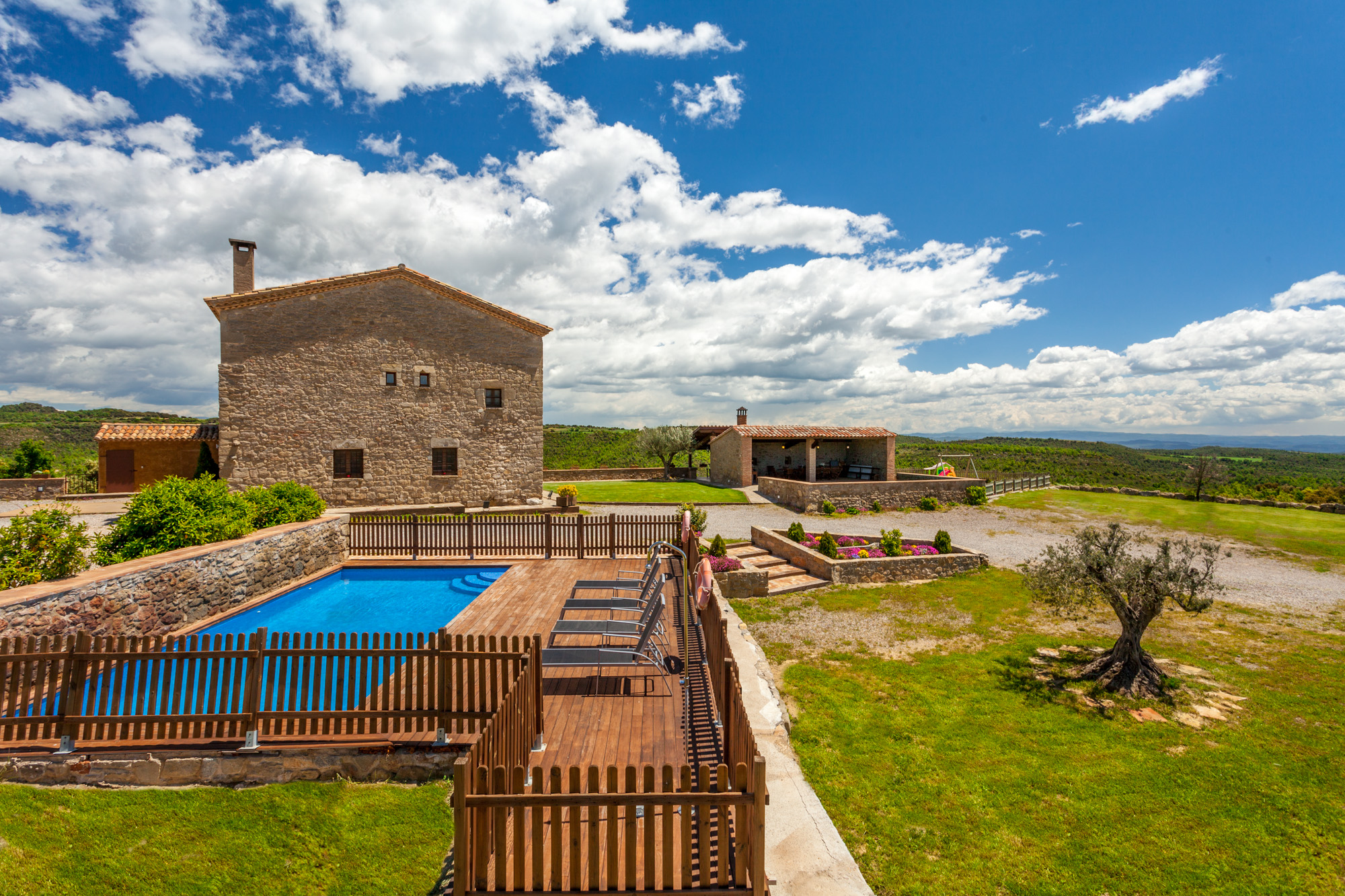
15th-century farmhouse with indoor pool, ideal for groups of up to 20 guests
Check availability