Sant Jaume de Frontanyà, in the smallest municipality in the Berguedà by population, is home to one of Catalonia's most architecturally refined Romanesque churches. Built in the 11th century, its Greek cross plan and harmonious proportions exemplify the geometric ideals of medieval sacred architecture.
The Greek Cross Design
Unlike most Romanesque churches, which follow a basilica plan with a long nave, Sant Jaume de Frontanyà adopts a Greek cross layout: four equal arms radiating from a central square. This design, more common in Byzantine architecture, creates a sense of balance and centrality, with the altar at the crossing where the arms meet.
Above the crossing rises a dome supported on squinches—stone brackets that transition from the square base to the circular dome. This elegant structural solution was a hallmark of Romanesque engineering, allowing builders to crown centralised spaces with soaring vaults. The interior light, filtering through narrow windows in the dome, creates a contemplative atmosphere.
Lombard Decoration and Stonework
The exterior of Sant Jaume is adorned with Lombard arcading: rows of small blind arches supported on corbels, running along the roofline of the apses and transept arms. This decorative motif, introduced by Lombard masons working in Catalonia in the 11th century, became a defining feature of Catalan Romanesque.
The church is built entirely of local sandstone, cut into regular blocks and laid in even courses. The craftsmanship is exceptional: tight joints, precise angles and a pleasing patina acquired over nine centuries. The church's proportions—the relationship between height, width and length—are often cited as near-perfect, embodying the medieval belief that sacred architecture should reflect divine order.
The Augustinian Priory
Sant Jaume was not merely a parish church but the centre of an Augustinian priory that exercised spiritual jurisdiction over the surrounding region. Augustinian canons lived a communal religious life while serving local parishes, maintaining libraries and offering hospitality to travellers. The priory at Frontanyà was relatively small, but its influence extended across the upper Berguedà.
By the late Middle Ages, the priory had declined, and the church became a simple parish serving the tiny village. Today, Frontanyà has fewer than 30 permanent residents, giving it an atmosphere of timeless tranquillity. The church stands amid meadows and stone farmhouses, with the Pyrenean foothills rising to the north.
The Setting and Landscape
The journey to Sant Jaume de Frontanyà is itself rewarding: the road winds through forests of oak and beech, past upland pastures where cattle graze in summer. The municipality is one of the least densely populated in Catalonia, and the sense of remoteness is palpable. This isolation, once a challenge for inhabitants, now makes Frontanyà a refuge for visitors seeking peace and natural beauty.
The area offers excellent opportunities for hiking and nature observation. The beech forests (fagedes) turn brilliant gold in autumn, and spring brings wildflowers to the mountain meadows. The silence is broken only by cowbells and birdsong.
Visiting Sant Jaume de Frontanyà
From La Tor de Montclar, Sant Jaume de Frontanyà is approximately 25 km via mountain roads, taking about 30 minutes. The route is scenic but winding, so drive with care. The church can be visited on weekends and by prior appointment during the week; contact the Berguedà tourist board for details.
There are no commercial facilities in Frontanyà village itself, so bring water and snacks if you plan to walk in the area. The nearest restaurants and shops are in neighbouring municipalities such as Gósol or Bagà. Allow time to walk around the village and enjoy the mountain views—this is a place to linger, not rush through.
Practical information
Free (check opening times in advance)
1 hour (church and village)
Easy (church is accessible; local walks moderate)
Spring to autumn; snow possible in winter
25 km (30 minutes)
Discover Berguedà from La Tor de Montclar
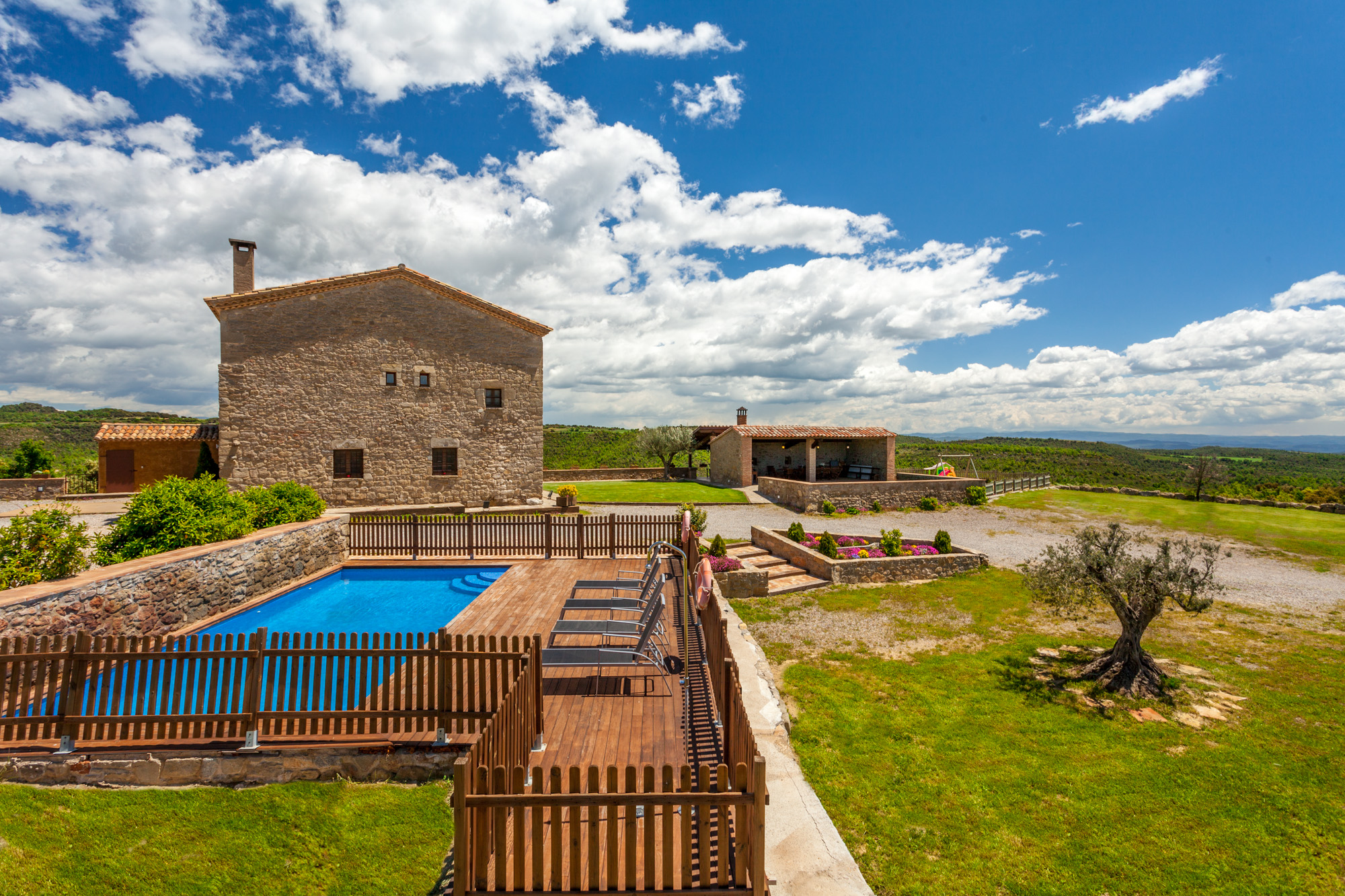
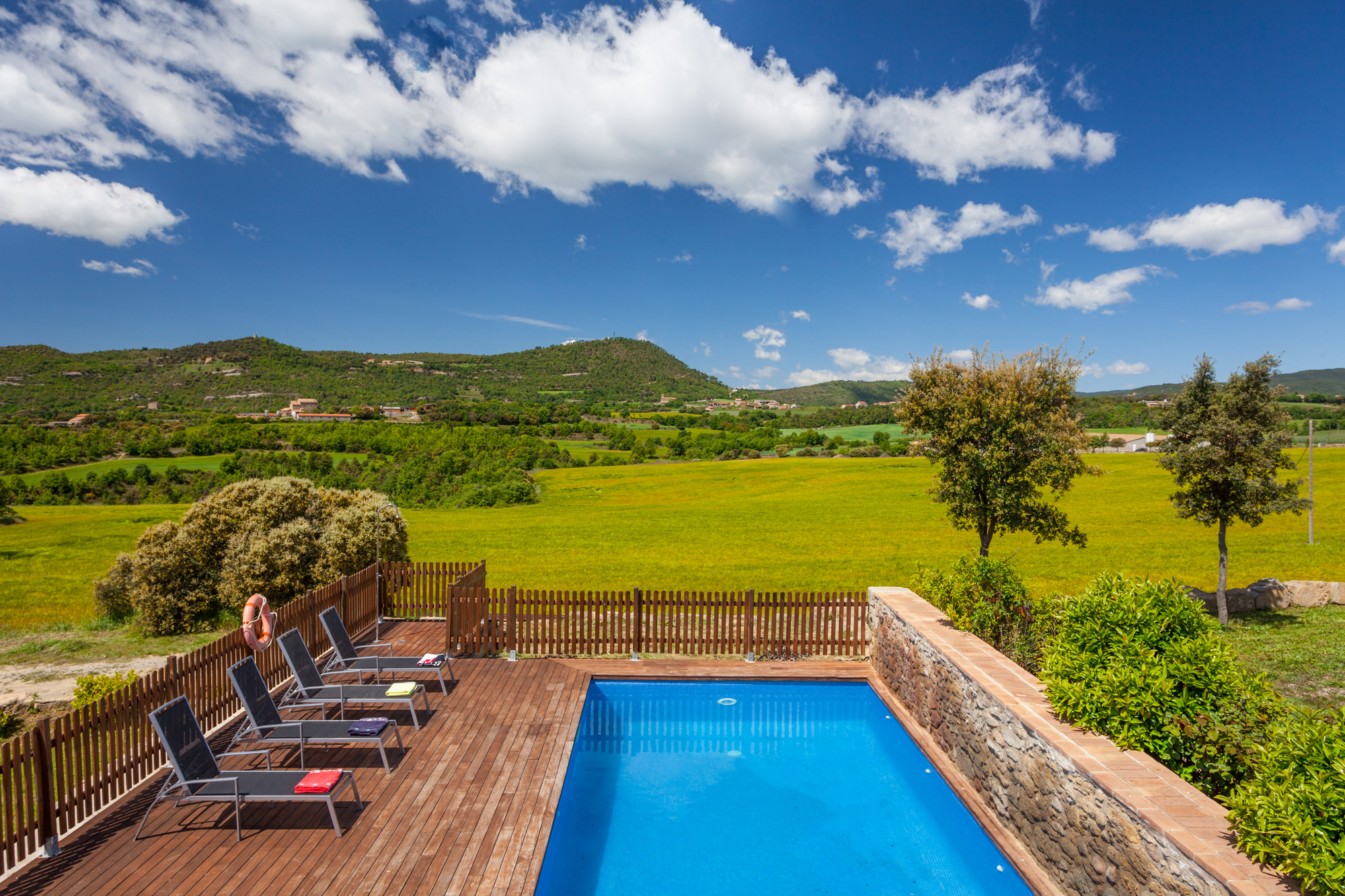
15th-century farmhouse with indoor pool, ideal for groups of up to 20 guests
Check availability