The Berguedà's mountains, forests, rivers and meadows support a remarkably diverse array of wildlife. From the majestic Pyrenean chamois grazing on high ridges to golden eagles and bearded vultures soaring above the Pedraforca, from otters in the Llobregat's clear waters to wild boar in the holm oak woods, this region is a paradise for nature enthusiasts. Understanding the fauna, their habitats and behaviour patterns enhances any visit and contributes to their conservation.
Mammals of the Mountains and Forests
The Pyrenean chamois (Rupicapra pyrenaica pyrenaica, locally called "isard") is the flagship mammal of the region. These agile mountain goats inhabit the rocky slopes and alpine meadows of the Cadí range, Pedraforca and other high peaks. Adults have distinctive backward-curving horns, tawny summer coats that turn darker in winter, and a black facial mask. Chamois are most active at dawn and dusk, grazing in groups on steep terrain where predators struggle to approach.
Roe deer (Capreolus capreolus) are common in mixed forests throughout the Berguedà. These elegant, relatively small deer feed in meadows at dawn and dusk, retreating to woodland cover during the day. Males carry short, vertical antlers that they shed and regrow annually. Listen for their distinctive bark-like alarm call.
Wild boar (Sus scrofa) are abundant, perhaps too abundant, in the Berguedà's forests and oak woodlands. These powerful, tusked pigs root through soil for acorns, tubers, fungi and invertebrates, leaving characteristic disturbed ground. Wild boar are mostly nocturnal but can be encountered during the day, especially in quieter areas. They are generally shy but can be aggressive if cornered or when protecting young -- give them a wide berth.
Red squirrels (Sciurus vulgaris) inhabit pine and mixed forests, where their acrobatic leaps between branches and chattering scolds are often the first sign of their presence. Look for chewed pine cones beneath trees.
Foxes, badgers, pine martens and beech martens are present but elusive, mostly nocturnal. You may see tracks or droppings rather than the animals themselves. The European pine marten is an agile tree-dwelling carnivore about the size of a cat, with chocolate-brown fur and a yellow throat bib.
The brown bear (Ursus arctos) is making a tentative return to the Pyrenees after near-extinction. Occasional sightings and tracks have been reported in the Berguedà in recent years, though the population remains tiny and encounters extremely rare. If you are incredibly fortunate enough to see a bear, observe from a safe distance and never approach.
Birds of Prey: Eagles, Vultures and Falcons
The Berguedà is exceptional for raptors and birds of prey. The skies above the Cadí range and Pedraforca regularly host some of Europe's most magnificent birds.
The golden eagle (Aquila chrysaetos) is the king of the air, with a wingspan exceeding 2 metres. These powerful predators hunt chamois, marmots, hares and birds across open mountain terrain. Watch for their distinctive soaring flight with wings held in a shallow "V" shape. Golden eagles nest on remote cliff ledges and are most visible in spring and early summer.
The bearded vulture (Gypaetus barbatus, locally "trencalòs" or bone-breaker) is one of Europe's rarest and most spectacular birds. With a wingspan of nearly 3 metres, orange-stained plumage and distinctive black mask, these giant vultures are unmistakable. Unlike other vultures, bearded vultures feed primarily on bones, which they drop from height onto rocks to crack open and access the marrow. The Cadí-Moixerò Natural Park is a stronghold for this species.
Griffon vultures (Gyps fulvus) are more common, often seen in soaring groups called "kettles". These huge vultures have broad wings, short tails and buff-brown plumage. They feed exclusively on carrion and nest in colonies on cliff faces.
Peregrine falcons nest on rock faces throughout the region. These streamlined hunters are the fastest animals on Earth, diving at speeds exceeding 300 km/h to strike prey in mid-air. Kestrels are smaller, commonly seen hovering over roadside verges while hunting for voles.
Booted eagles, short-toed eagles and buzzards add to the raptor diversity. Northern goshawks and sparrowhawks hunt in forests, while red kites patrol valley bottoms.
Forest and Woodland Birds
The Berguedà's forests resound with birdsong, particularly in spring when breeding birds establish territories. Even casual visitors can enjoy a rich variety of woodland species.
Great spotted woodpeckers drum on tree trunks, the staccato rhythm echoing through pine forests. Black woodpeckers, the largest European woodpecker species, prefer mature beech forests. Their loud, ringing calls and fist-sized nest holes are distinctive.
Crossbills use their uniquely crossed bills to extract seeds from pine cones. Flocks move through conifer forests, calling constantly. Firecrests, Europe's smallest birds, search for insects among spruce and fir branches, their high-pitched calls barely audible.
Nuthatches, treecreepers, jays and tits (including coal, blue, great and crested tits) are common in mixed woodlands. The European jay's harsh screech often alerts the forest to human presence.
Nightingales fill valley woodlands with their complex, melodious song from April through June, mostly singing at night. Blackcaps, robins, song thrushes and blackbirds contribute to the dawn chorus.
In higher altitude pine forests, watch for citril finches, a speciality of the Pyrenees with their greenish-yellow plumage and twittering calls.
Waterbirds and Wetland Species
While the Berguedà is primarily a mountain region, its rivers and the Baells reservoir support aquatic bird species.
The white-throated dipper is the star of Berguedà's rivers. This dumpy, chocolate-brown bird with a white throat bobs on rocks before plunging into fast-flowing streams to walk along the bottom, hunting for aquatic invertebrates. Dippers are resident year-round on the Llobregat and its tributaries.
Grey wagtails with their long tails and yellow underparts frequent riversides, while grey herons stand motionless in shallows waiting to strike at fish.
The Baells reservoir attracts cormorants, coots, mallards and various diving ducks in winter. During migration periods (April-May and August-October), scarcer waterfowl and waders can appear, making it worth scanning with binoculars.
Reptiles, Amphibians and Butterflies
The Berguedà supports several reptile species. Lizards including the ocellated lizard (bright green, can reach 60 cm) and wall lizards bask on sunny rocks. Slow worms (legless lizards) inhabit meadows and forest edges.
Several snake species occur, though encounters are infrequent as they avoid humans. The Pyrenean asp viper (Vipera aspis) is the only venomous snake in the region, recognisable by its vertical slit pupils, triangular head and zigzag back pattern. Bites are rare and seldom fatal to healthy adults, but require medical attention. Most snakes are harmless grass snakes and smooth snakes that feed on rodents and frogs.
Amphibians include the common toad, fire salamander (spectacular yellow and black markings), alpine newt and several frog species. The Pyrenean brook salamander inhabits cold mountain streams.
The region's butterfly diversity is exceptional, with over 150 species recorded. Spring and summer meadows attract swallowtails, fritillaries, blues, coppers and skippers. The spectacular Apollo butterfly (Parnassius apollo), with its white wings spotted with red and black, flies in alpine meadows from June to August and is protected throughout Europe.
Where and When to See Wildlife
Dawn and dusk offer the best chances for mammal sightings, as most species are crepuscular. Early mornings also feature the most intense birdsong and activity.
The Gresolet valley, accessed from Castellar de n'Hug, is excellent for chamois (especially on the upper slopes), roe deer in the forest and woodland birds. The road up the valley often yields raptor sightings.
The Cadí-Moixerò Natural Park is the prime wildlife area, with extensive populations of chamois, abundant raptors including bearded vultures and golden eagles, and the richest butterfly fauna. The peaks around the Refugi de Rebost and the slopes of the Pedraforca are particularly rewarding.
The Baells reservoir is best for waterbirds, particularly in winter and during migration. The wooded shores support deer, boar and forest birds.
Around La Tor de Montclar, the meadows attract butterflies in summer, while the surrounding forests and fields hold roe deer, foxes and woodland birds. Night-time brings owls, including tawny and barn owls.
Spring (April-June) is ideal for birdsong, breeding displays, wildflowers that attract butterflies, and young chamois. Autumn (September-November) sees deer rutting, bird migration and clearer air for distant views. Winter offers fewer species but easier viewing due to sparse vegetation, and chamois descend to lower elevations.
Responsible Wildlife Watching
Observe wildlife from a respectful distance using binoculars or a telephoto lens. Approaching too closely causes stress, wastes the animal's energy and may provoke defensive behaviour.
Never feed wildlife. Natural diets are essential for health, and feeding habituates animals to humans, which endangers both.
Keep dogs on leads in natural areas, especially during breeding seasons. Free-running dogs disturb ground-nesting birds, flush deer and can chase chamois onto dangerous terrain.
Avoid visiting nesting sites and breeding areas. Disturbance can cause parents to abandon nests or young. Observe from designated viewpoints and trails.
Move quietly and calmly. Loud voices and sudden movements alarm wildlife and reduce your chances of sightings. Wear muted colours that blend with the landscape.
Support conservation by visiting the Cadí-Moixerò Natural Park information centres, participating in guided wildlife walks and respecting protected area regulations. Wildlife tourism, when done responsibly, provides economic incentives for conservation and helps local communities value their natural heritage.
Practical information
Half-day to full-day outings; dawn and dusk are best
Varies from easy birdwatching to challenging mountain hiking
Spring (April-June) and autumn (September-November) for optimal wildlife viewing
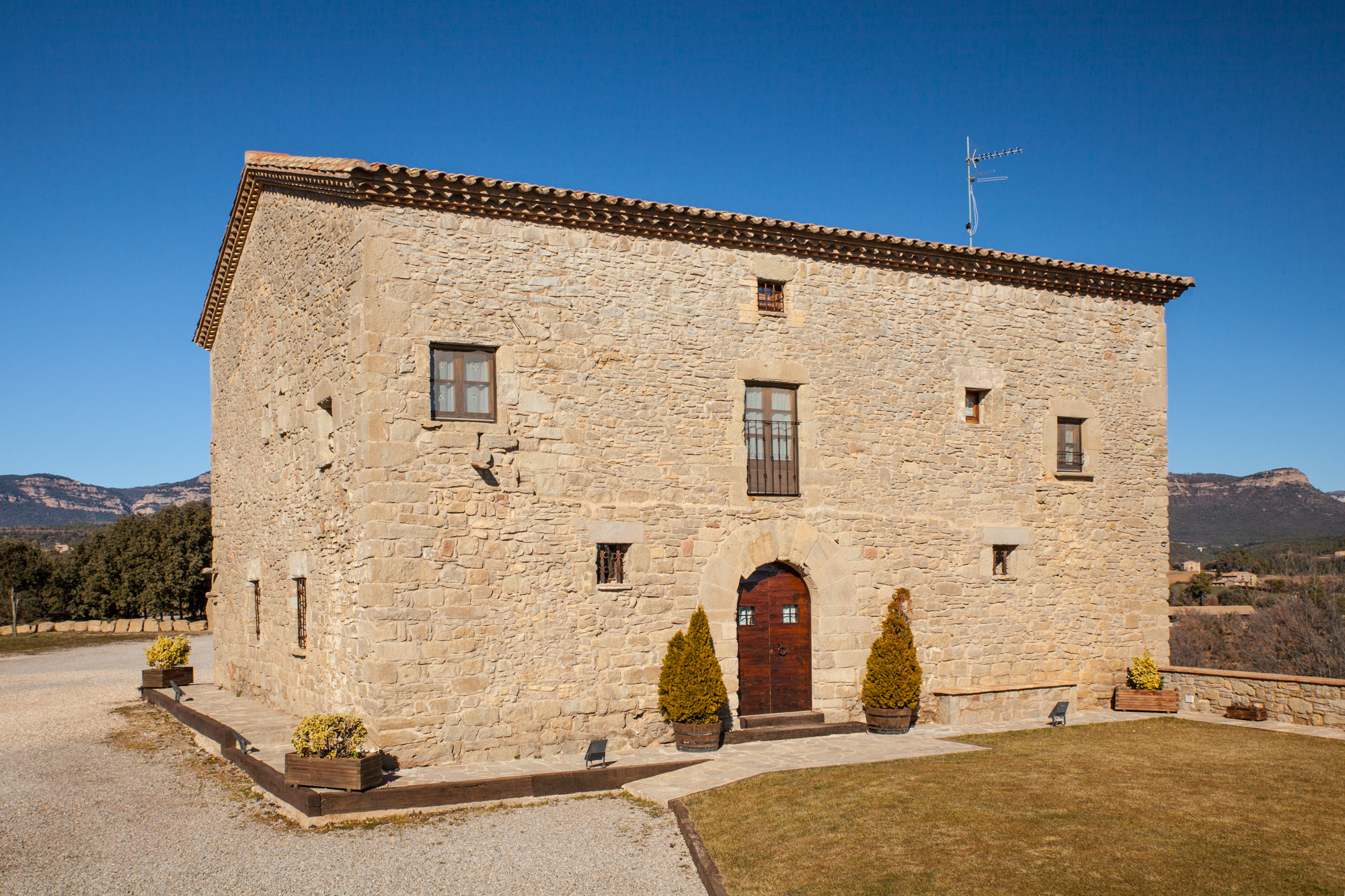
Discover Berguedà from La Tor de Montclar
15th-century farmhouse with indoor pool, ideal for groups of up to 20 guests
Check availabilityRelated articles
Flora of the Berguedà: Forests, Wildflowers and Vegetation Zones
Read more →
Cadi-Moixero Natural Park: wilderness at your doorstep
Read more →
Gresolet Beech Forest: Walking Beneath Pedraforca's North Face
Read more →
Pedraforca via Verdet Route: Classic Ascent of an Iconic Peak
Read more →