The Berguedà's exceptional botanical diversity stems from its position at the transition between Mediterranean lowlands and the Pyrenean highlands. Within a short distance, the landscape transforms from drought-adapted holm oak woodlands to lush beech forests and finally to Alpine meadows dotted with rare mountain flowers. This living mosaic of vegetation zones supports an extraordinary range of plant species that changes dramatically with altitude and season.
Vegetation Zones and Altitude Transitions
The Berguedà's flora is organised into distinct altitudinal vegetation belts, each with characteristic plant communities. Understanding these zones helps visitors appreciate the remarkable botanical journey from valley floor to mountain summit.
The Mediterranean zone (600-900 m) is dominated by evergreen holm oak (Quercus ilex) forests mixed with Aleppo pine on drier, south-facing slopes. The understorey includes box, rosemary, lavender, thyme and the strawberry tree (Arbutus unedo). This is the vegetation of the lower Llobregat valley and southern areas around Berga.
The sub-Mediterranean zone (900-1,400 m), which includes La Tor de Montclar, features Scots pine (Pinus sylvestris) forests mixed with deciduous oaks. This transitional zone supports rich biodiversity with both Mediterranean and mountain species coexisting. Meadows here are carpeted with wildflowers in spring.
The montane zone (1,400-1,800 m) is the realm of magnificent beech (Fagus sylvatica) forests, particularly spectacular in the Gresolet valley and on north-facing slopes. Beech forests create a cathedral-like atmosphere with columnar trunks and a dense summer canopy that limits undergrowth. Autumn foliage is breathtaking, with leaves turning golden, orange and rust-red.
The subalpine zone (1,800-2,300 m) sees black pine (Pinus uncinata, also called mountain pine) becoming dominant. These hardy conifers form the treeline, often growing in twisted, wind-sculpted forms. The forest floor supports shade-tolerant ferns, mosses and fungi.
Above the treeline, the Alpine zone (2,300 m and above) features grasslands, cushion plants and rock-dwelling specialists adapted to harsh conditions. The summit zones of the Pedraforca and Cadí range exemplify this environment.
Forest Trees and Dominant Species
The holm oak is the quintessential Mediterranean tree, evergreen with dark, leathery leaves adapted to conserve water. Its acorns feed wild boar and deer. Holm oak forests are cool havens in summer with a distinctive earthy scent.
Scots pine is the most widespread conifer in the Berguedà, forming extensive forests that provide timber and resin. The reddish bark and paired needles are distinctive. Scots pine thrives on the region's well-drained soils and tolerates cold winters.
The beech creates some of the most beautiful forests in the region. Smooth grey bark, delicate oval leaves that rustle in the breeze, and spectacular autumn colour make beech woodlands a highlight of any visit. Beech prefers cool, moist conditions on north-facing slopes.
Black pine forms the high-altitude treeline, withstanding deep snow, avalanches and fierce winds. Its growth is slow but steady, with some individuals several centuries old. The distinctive hooked needles give it the scientific name "uncinata".
Deciduous oaks including downy oak (Quercus pubescens) and, rarely, sessile oak add diversity to mixed forests. Silver fir (Abies alba) occurs in the wettest, coolest valleys, recognisable by its upright cones and silvery bark.
Spring and Summer Wildflowers
Spring (April to June) brings an explosion of wildflowers to the meadows around La Tor de Montclar, the Gresolet valley and mountain pastures. This is the finest season for botanical enthusiasts.
Narcissi (Narcissus poeticus and other species) carpet meadows in white and yellow from April onwards. The meadows near Montclar are particularly rich in these beautiful bulbs, which are protected throughout Catalonia.
Several orchid species occur in grasslands and open woodlands, including the early purple orchid, green-winged orchid, fragrant orchid and the stunning lady's slipper orchid (Cypripedium calceolus) in a few hidden locations. Orchids are strictly protected and must never be picked or dug up.
Gentians bring intense blue to Alpine meadows from May onwards. The trumpet gentian (Gentiana acaulis) is common above 1,800 m, while the spring gentian flowers as soon as snow melts. These plants have been used medicinally for centuries and are now protected in wild areas.
The Pyrenean saxifrages (Saxifraga species) specialise in rock crevices, forming cushions of tiny leaves and white or yellow flowers. The Cadí range supports several endemic saxifrages found nowhere else.
In June, Alpine meadows display mountain avens, Alpine asters, globeflowers, anemones and campanulas. The diversity peaks between 1,800 and 2,200 m, creating colourful tapestries that attract butterflies and bees.
The rare edelweiss (Leontopodium alpinum) grows on limestone rocks above 2,000 m, its silvery-white star-shaped flower heads an iconic Alpine symbol. Edelweiss is protected and should be admired but never picked.
Autumn Colours and Mushrooms
Autumn transforms the Berguedà into a palette of gold, orange, red and russet. Beech forests provide the most spectacular displays, particularly in the Gresolet valley and on the north-facing slopes of the Cadí range from late October to early November.
Deciduous oaks turn bronze and burgundy, while birches add splashes of butter-yellow. The gradual descent of autumn colour from high altitudes to valley floors extends the season from September to November.
Autumn is also the season for mushrooms and fungi. The Berguedà is renowned as one of Catalonia's finest foraging areas, attracting mycologists and gastronomes from across the region. The most prized edible species include:
Rovellons (Lactarius deliciosus, saffron milk cap) grow under pine trees, recognisable by their orange colour that bleeds green when cut. These are the region's most sought-after mushrooms, grilled simply with garlic and parsley.
Ceps (Boletus edulis, penny bun) are highly prized for their rich flavour and meaty texture. They grow in beech and oak forests and can reach impressive sizes. Related species like Boletus aereus are equally delicious.
Chanterelles (Cantharellus cibarius) add their golden trumpets to forest floors from summer through autumn. Morels (Morchella species) appear in spring, particularly after forest fires.
Mushroom foraging requires expert identification as several poisonous species occur in the same habitats. Never eat mushrooms unless you are certain of identification or have had them checked by an expert. Commercial foraging requires a licence from local authorities.
Shrubs, Understorey Plants and Aromatic Herbs
The Berguedà's understorey and shrub layer is rich in aromatic and medicinal plants. Mediterranean areas support rosemary (Rosmarinus officinalis), thyme (Thymus vulgaris), lavender (Lavandula angustifolia) and savory (Satureja montana). These aromatic herbs scent the air on warm days and have been used for centuries in traditional cooking and medicine.
Box (Buxus sempervirens) forms dense thickets in limestone areas, its evergreen foliage providing winter cover for wildlife. Juniper species add their blue-grey foliage and berry-like cones to rocky slopes and forest edges.
Ericaceous shrubs including blueberry (Vaccinium myrtillus), bearberry (Arctostaphylos uva-ursi) and rhododendron (Rhododendron ferrugineum) grow on acidic soils in the highest forests. Blueberries ripen in late summer, providing food for bears, birds and (historically) shepherds.
Dog rose (Rosa canina) drapes itself over hedgerows and forest edges, producing fragrant pink flowers in May and red hips in autumn. The hips are rich in vitamin C and used for teas and syrups.
Conservation, Protected Areas and Responsible Visiting
The Cadí-Moixerò Natural Park protects some of the finest botanical habitats in the region. This 41,342-hectare park encompasses limestone peaks, beech forests, alpine meadows and several endemic plant species found nowhere else in the world.
Several plants in the Berguedà are legally protected. These include all orchid species, gentians, edelweiss, narcissi, endemic saxifrages and several rare cushion plants. Collecting, uprooting or damaging protected plants is illegal and subject to significant fines.
Even unprotected plants should be treated with respect. Stay on marked trails to avoid trampling fragile vegetation, especially in alpine zones where plants grow very slowly. Never pick wildflowers -- they complete their life cycle and set seed, ensuring future displays. Photographs last longer than picked flowers anyway.
Mushroom foraging is permitted in many areas but requires a licence (obtainable from town halls in the region). Limits apply to quantity and species. When foraging, use a knife to cut mushrooms rather than pulling them up, which damages the underground mycelium. Collect only what you can use and leave some for wildlife and reproduction.
The Institut Botànic de Barcelona and local nature organisations offer guided botanical walks and identification courses. The best times for botanical visits are late April to June for wildflowers and September to November for autumn colour and mushrooms.
Practical information
Full-day or half-day outings for botanical exploration
Varies from easy valley walks to challenging mountain hikes
Spring (April-June) for wildflowers, autumn (September-November) for foliage and mushrooms
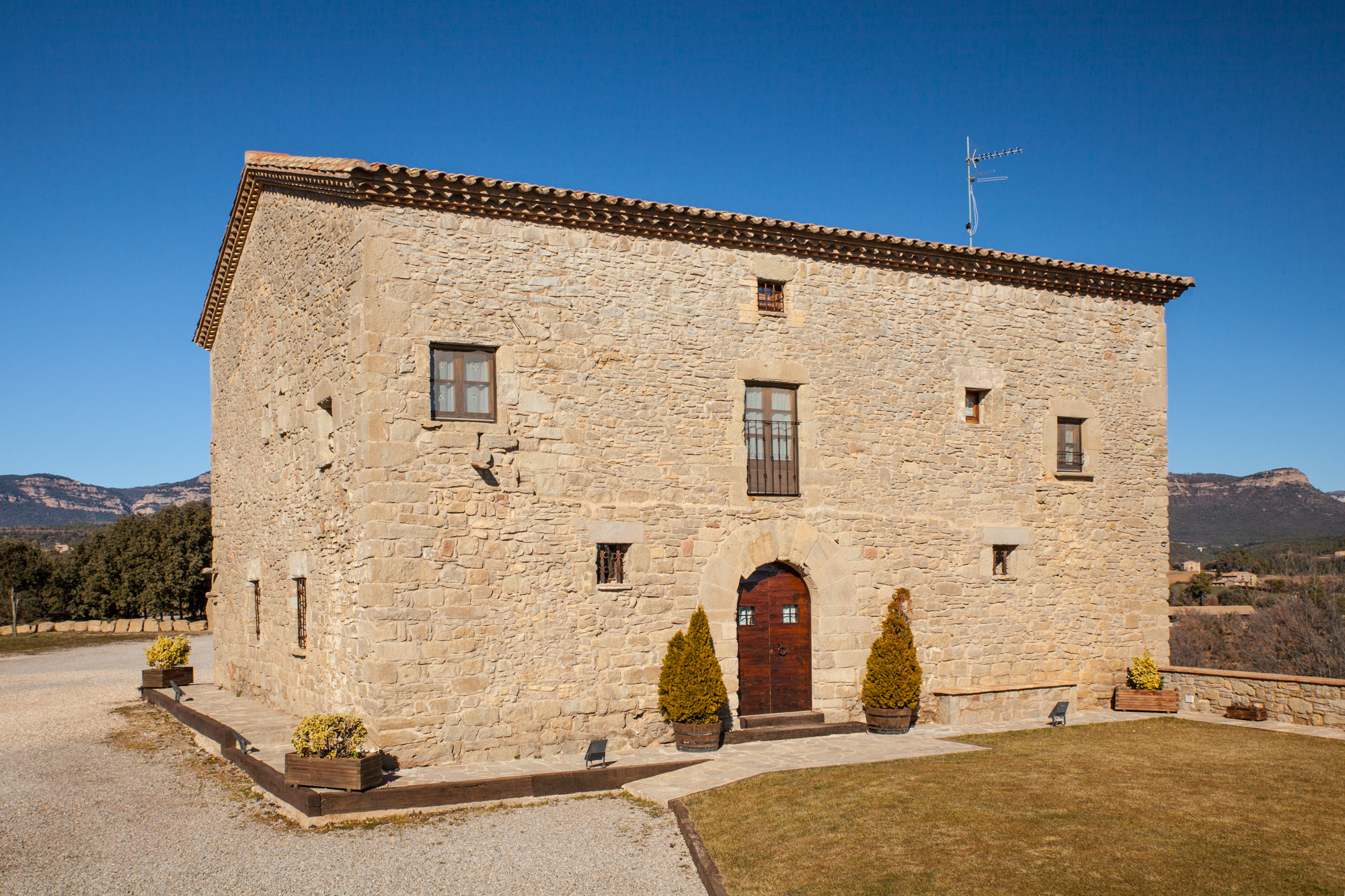
Discover Berguedà from La Tor de Montclar
15th-century farmhouse with indoor pool, ideal for groups of up to 20 guests
Check availabilityRelated articles
Wildlife and Fauna of the Berguedà: Birds, Mammals and Where to Spot Them
Read more →
Gresolet Beech Forest: Walking Beneath Pedraforca's North Face
Read more →
Cadi-Moixero Natural Park: wilderness at your doorstep
Read more →
Pedraforca via Verdet Route: Classic Ascent of an Iconic Peak
Read more →