Proper preparation and appropriate gear are fundamental to safe and enjoyable mountain activities in Berguedà. The region's terrain varies from gentle valley walks suitable for families to technical climbs like the Pedraforca summit that demand mountaineering experience. Weather conditions can change dramatically with altitude and time of day, particularly in summer when morning sunshine can give way to afternoon thunderstorms within hours. This comprehensive guide helps international visitors pack appropriately for Berguedà's mountains, whether planning day hikes, multi-day treks, or family outings. Understanding what to bring—and what to leave behind—makes the difference between a memorable adventure and an uncomfortable or potentially dangerous experience.
Clothing Layers: The Three-Layer System Explained
Mountain weather in Berguedà demands a layering system rather than single bulky garments. The three-layer approach allows you to regulate temperature efficiently as conditions change. Start with a base layer made of moisture-wicking synthetic or merino wool fabric that sits next to your skin and moves sweat away from your body. Avoid cotton, which retains moisture and causes rapid heat loss—potentially dangerous in cooler conditions.
The mid-layer provides insulation. A fleece jacket or lightweight down jacket works well from autumn through spring. In summer, a single long-sleeved shirt often suffices as mid-layer. Your outer shell layer should be waterproof and windproof with sealed seams and a hood. Even in summer, a packable rain jacket is essential as afternoon thunderstorms develop regularly from June through September.
Specific recommendations: In summer (June-August), bring short-sleeved shirts but also pack long sleeves for sun protection at altitude where UV exposure increases 10-12% per 3,300 feet (1,000 m). Spring and autumn (March-May, September-November) require warmer mid-layers as temperatures range from 45-68°F (7-20°C). Winter (December-February) demands full insulation with thermal base layers, warm fleece or down, and a robust hardshell jacket. For lower body, quick-dry hiking trousers work year-round; convertible zip-off trousers offer versatility in variable conditions.
Footwear and Foot Care Essentials
Proper footwear is perhaps the single most important gear decision for mountain activities. For most Berguedà trails, including moderate routes like Gresolet valley or Pedraforca's easier approaches, hiking boots with ankle support are essential. The terrain features rocky paths, loose scree, and uneven surfaces where ankle injuries are common risks. Boots should have a Vibram or equivalent rubber sole with good tread for grip on wet rocks and muddy sections.
Break in new boots thoroughly before your trip—walk at least 20-30 miles in them at home to avoid painful blisters. Bring blister treatment supplies including adhesive blister pads and athletic tape. For lower-altitude valley walks or village explorations, lightweight trail runners or approach shoes work well. In winter, boots must be waterproof and insulated; some high routes may require crampons compatible with your boots.
Sock strategy: Invest in quality hiking socks with cushioning and moisture-wicking properties. Merino wool-blend socks prevent blisters better than cotton. Bring at least two pairs per day of hiking, allowing you to change into dry socks at midday on longer treks. Gaiters protect lower legs from mud, water, and vegetation on wetter trails. For international visitors: European shoe sizes differ from US/UK sizing—verify conversion charts before purchasing boots in Barcelona or Berga.
Backpack, Hydration, and Nutrition
For day hikes in Berguedà, a 20-30 liter daypack provides sufficient capacity without excessive weight. Look for packs with padded shoulder straps, a hip belt to transfer weight from shoulders to hips, and external attachment points for trekking poles. A built-in rain cover or pack liner protects contents during sudden downpours. Distribute weight properly: heavy items like water should sit close to your back and high in the pack.
Hydration needs: Berguedà's dry mountain air and physical exertion require more water than you might expect. Carry minimum 1.5-2 liters per person for moderate day hikes, increasing to 3 liters for strenuous routes like Pedraforca or during summer heat. Hydration bladders with drinking tubes allow you to sip regularly without stopping, maintaining better hydration. Mountain streams may look pristine but can contain giardia and other pathogens—carry water purification tablets or a filter if planning to refill from natural sources.
Energy and nutrition: Pack calorie-dense, easy-to-eat snacks including nuts, dried fruit, energy bars, chocolate, and sandwiches. The Spanish tradition of bocadillo (baguette sandwich with cured meat and cheese) makes an excellent hiking lunch. Fresh fruit provides hydration and vitamins. Avoid foods that melt in heat or require refrigeration. Plan for approximately 200-300 calories per hour of hiking. Many Catalan hikers carry fuet (thin dry sausage) and Manchego cheese—both available in Berga's markets and perfect for mountain nutrition.
Navigation, Communication, and Safety Equipment
Despite the prevalence of GPS-enabled smartphones, traditional navigation tools remain essential in Berguedà's mountains. Mobile signal is unreliable or nonexistent in many valleys and high-altitude areas. Carry a detailed topographic map covering your planned route—the 1:25,000 scale ICC (Institut Cartogràfic i Geològic de Catalunya) maps are excellent. Learn basic map-reading and compass skills before your trip.
Digital tools: Download offline maps for the entire Berguedà region before leaving La Tor de Montclar. Recommended apps include Wikiloc (most popular in Catalonia with thousands of local routes), Organic Maps, and OsmAnd for topographic data. Download the Meteocat app for Catalan weather forecasts and radar. Install My112, the official Spanish emergency app that automatically sends your GPS location when calling emergency services. Carry a fully charged portable power bank (10,000+ mAh capacity) as GPS navigation drains phone batteries rapidly.
Essential safety items: Pack a first aid kit with adhesive bandages, blister treatment, pain relievers, antihistamine, and any personal medications. Include a survival whistle—six short blasts is the international distress signal, recognized by mountain rescue services. An emergency space blanket (lightweight foil blanket) provides crucial insulation if injured or caught in unexpected weather. Headlamp or flashlight with spare batteries for emergencies or unexpectedly delayed returns. Sunglasses with UV protection and high SPF sunscreen are essential year-round at altitude. In winter, add chemical hand warmers, insulated gloves, warm hat, and gaiters. For technical routes, consider hiring a local mountain guide through Berguedà tourism office.
Seasonal Variations and Final Practical Tips
Summer specific (June-September): Wide-brimmed hat or cap for sun protection, lightweight long-sleeved shirt, insect repellent (mosquitoes and horseflies at lower altitudes), after-sun lotion, lightweight waterproof jacket for afternoon storms, electrolyte replacement tablets for intense exertion. Start hikes by 7-8 AM to complete routes before afternoon thunderstorms develop around 2-3 PM.
Winter specific (December-March): Insulated waterproof jacket and trousers, thermal underwear, warm hat covering ears, insulated gloves, neck gaiter or balaclava, sunglasses (snow reflection), crampons for icy sections, gaiters, trekking poles with snow baskets, emergency space blanket, thermos with hot beverage. Avalanche awareness for routes above 6,500 feet (2,000 m)—check conditions at lauegi.report.
For international visitors: Trekking poles can be checked in airplane luggage or purchased in Berga sports shops. Spanish pharmacies (farmàcia—green cross sign) stock first aid supplies, blister treatments, and sunscreen. Spain uses Type C and F electrical outlets (230V)—bring appropriate adapters for charging devices. In emergencies, call 112 (European emergency number, multilingual operators)—it works even without mobile signal by connecting to any available network. Mountain rescue service (Bombers GRAE) responds via 112. The nearest hospital is Hospital Comarcal de Berga, 20 minutes from La Tor de Montclar: +34 938 214 400.
Before setting out: Check weather forecast on Meteocat.cat. Inform someone at La Tor de Montclar of your planned route and expected return time. Many Catalan trail markers use yellow-white paint blazes (GR long-distance paths) or red-white (shorter local paths)—familiarize yourself with the marking system. Never hike alone on technical routes. Respect private property and close gates behind you in agricultural areas.
Practical information
Varies from easy family walks to technical mountaineering
Year-round hiking with seasonally adapted gear
Discover Berguedà from La Tor de Montclar
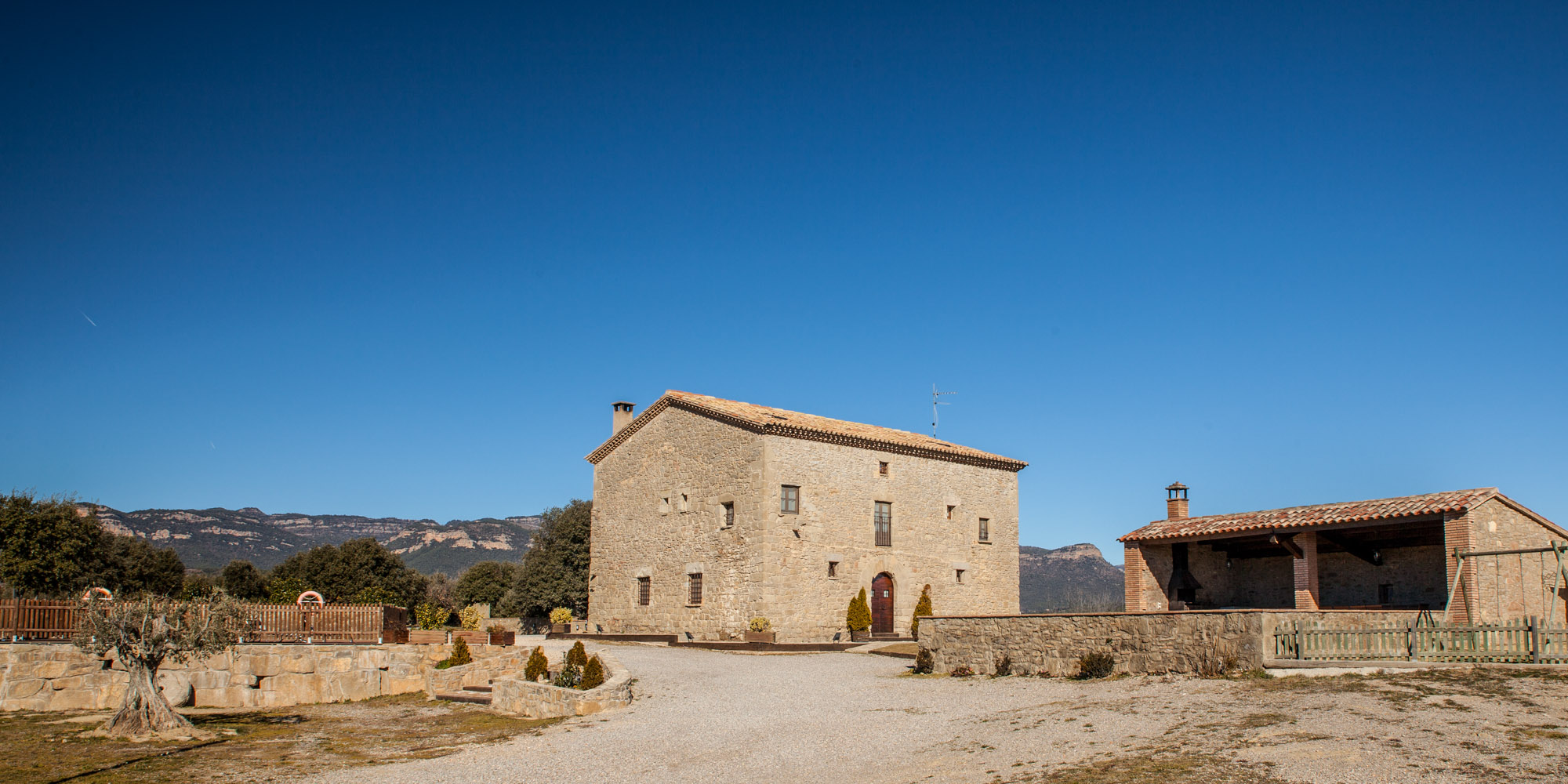
15th-century farmhouse with indoor pool, ideal for groups of up to 20 guests
Check availability