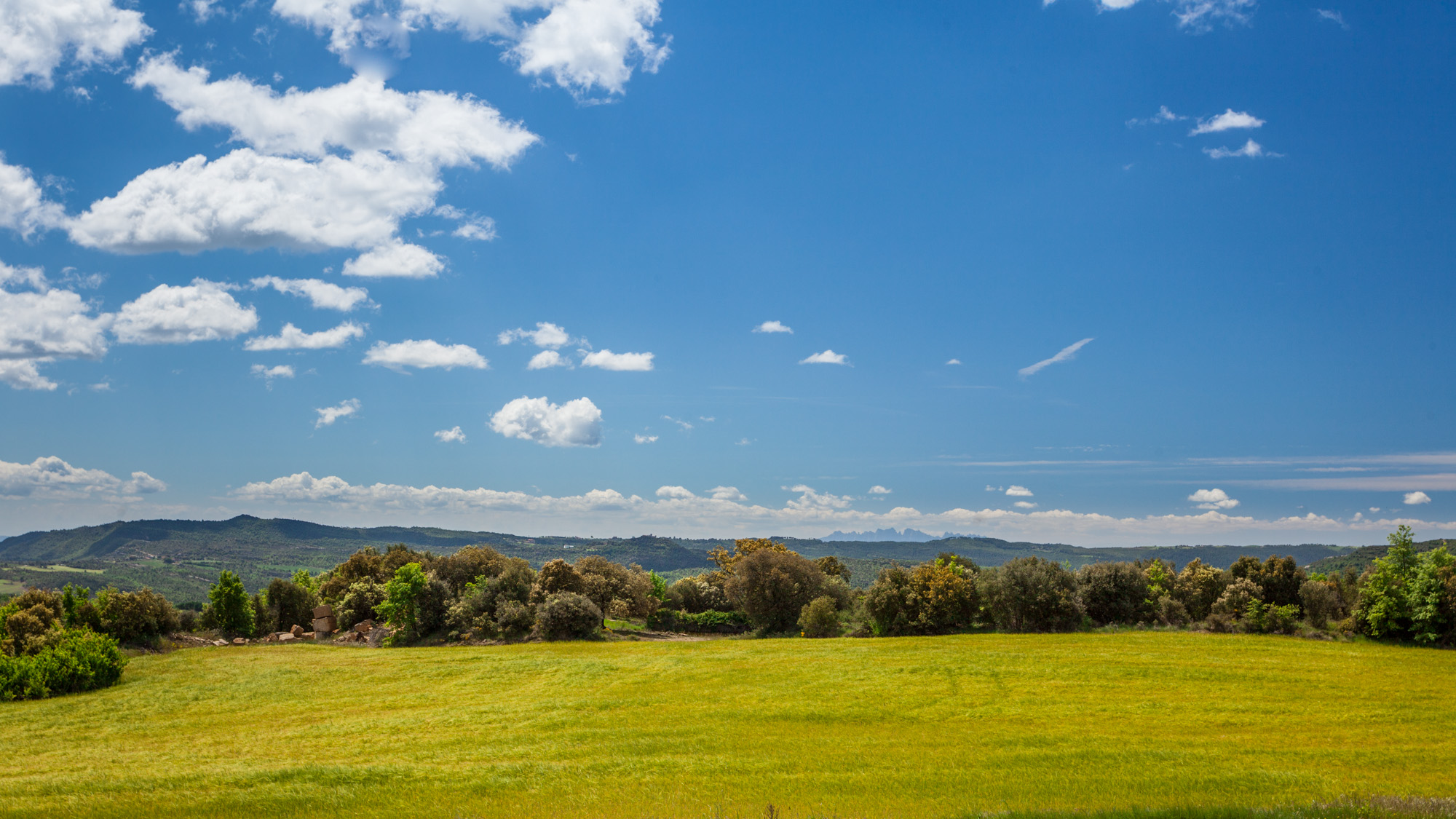
The Berguedà offers what film scouts call "production value"—diverse landscapes within short distances, dramatic natural lighting, and architectural texture spanning Romanesque to industrial. While not yet a major filming destination like Iceland or New Zealand, the region possesses cinematic qualities increasingly attractive to productions seeking authentic Mediterranean mountain settings without Alpine expense.
Natural Film Grammar: Reading the Landscape
Cinematographers prize the Berguedà for qualities that translate directly to screen:
- Elevation diversity: From 700m valleys to 2,500m summits within 25 km allows varied visual sequences without relocating crews.
- Light quality: The Pre-Pyrenean latitude (42°N) creates oblique light angles especially prized for dawn and dusk "golden hour" shooting. Winter sun remains low all day, extending premium lighting periods.
- Geological drama: The Pedraforca's distinctive two-peaked silhouette and the Cadí's limestone cliffs provide immediate visual punctuation—landscape as character.
- Seasonal palette: Deciduous beech forests deliver saturated autumn colours comparable to New England, while spring offers alpine meadow greens rare in Mediterranean Spain.
These qualities place the Berguedà within a specific cinematic genealogy—the mountain landscape as both refuge and challenge, comparable to locations in Werner Herzog's films or the Alpine sequences in Force Majeure (2014).
Documentary Traditions: Industrial Memory on Film
The Berguedà's most significant film heritage lies in documentary work preserving vanishing lifeways:
- Els Homes de la Roca (The Men of the Rock): Documents the final generation of shepherds practicing transhumance between Berguedà summer pastures and Baix Llobregat winter grounds—a system dating to Roman times.
- La Patum footage: Multiple documentary projects capture this UNESCO-recognised festival, including the official documentation supporting the 2005 UNESCO candidacy. The festival's combination of fire, percussion, and masked figures creates visually arresting sequences.
- Mining archives: The Cercs Mining Museum holds extensive film archives documenting lignite extraction from the 1940s-1990s, including propaganda films from the Franco autarky period that inadvertently preserve details of now-vanished labour practices.
These documentaries function as visual ethnography, comparable to Jean Rouch's work in Africa or the Maysles brothers' American portraits—using camera to preserve cultural practices in transition.
The Pedraforca as Icon: Photography and Visual Culture
The Pedraforca (2,497m) has achieved something rare—recognition as a visual icon independent of function. Its forked silhouette appears throughout Catalan visual culture: tourism posters, corporate logos, even political symbolism during the independence movement.
This iconographic status derives from geometric distinctiveness. Unlike the Matterhorn's pyramid or Mont Blanc's dome, the Pedraforca's bifurcated summit creates visual tension—a split, a fork, a choice. Photographers are drawn to this ambiguity. The mountain photographs dramatically from multiple angles, each revealing different aspects of its structure.
Seasonal photography has developed into a pursuit of its own. Autumn colour photographers converge on the Gresolet access road when beech forests turn. Winter photographers seek post-storm clarity when fresh snow contrasts with limestone grey. The mountain's north face—rarely photographed due to access difficulty—presents a vertical kilometre of sheer wall comparable to Yosemite's El Capitan.
Film Tourism and Future Directions
The Catalonia Film Commission actively markets the region to production companies, offering:
- Logistical support: Liaison with municipalities for shooting permits, police cooperation for road closures, and location scouting assistance.
- Infrastructure proximity: Barcelona's film production facilities lie 120 km away—close enough for crew housing while offering true mountain locations.
- Economic incentives: Catalan tax rebates up to 30% of production costs spent within Catalonia, comparable to Eastern European filming destinations.
Recent productions include historical drama sequences in the medieval centre of Bagà and commercial photography campaigns for outdoor equipment manufacturers. The textile colony of Colònia de Cal Rosal served as location for period sequences requiring intact industrial architecture.
For visitors interested in cinematic landscape, recommended viewpoints include: the Gresolet viewpoint (Pedraforca frontal), Coll de la Bena (profile view), and the Baells reservoir overlook (industrial landscape with water). From La Tor de Montclar, these locations range 15-35 km.
Practical information
15-35 km to key filming locations
Discover Berguedà from La Tor de Montclar
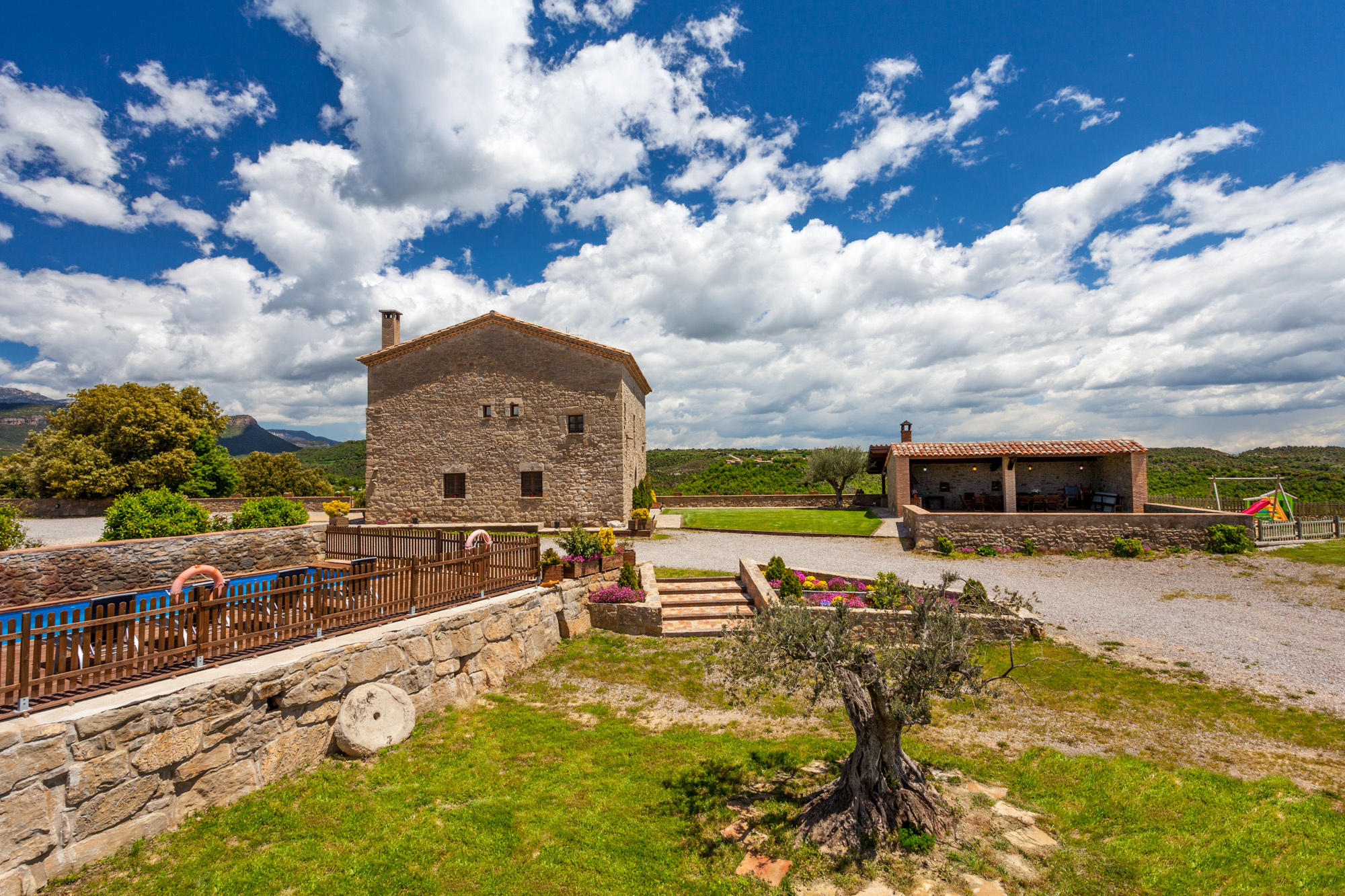
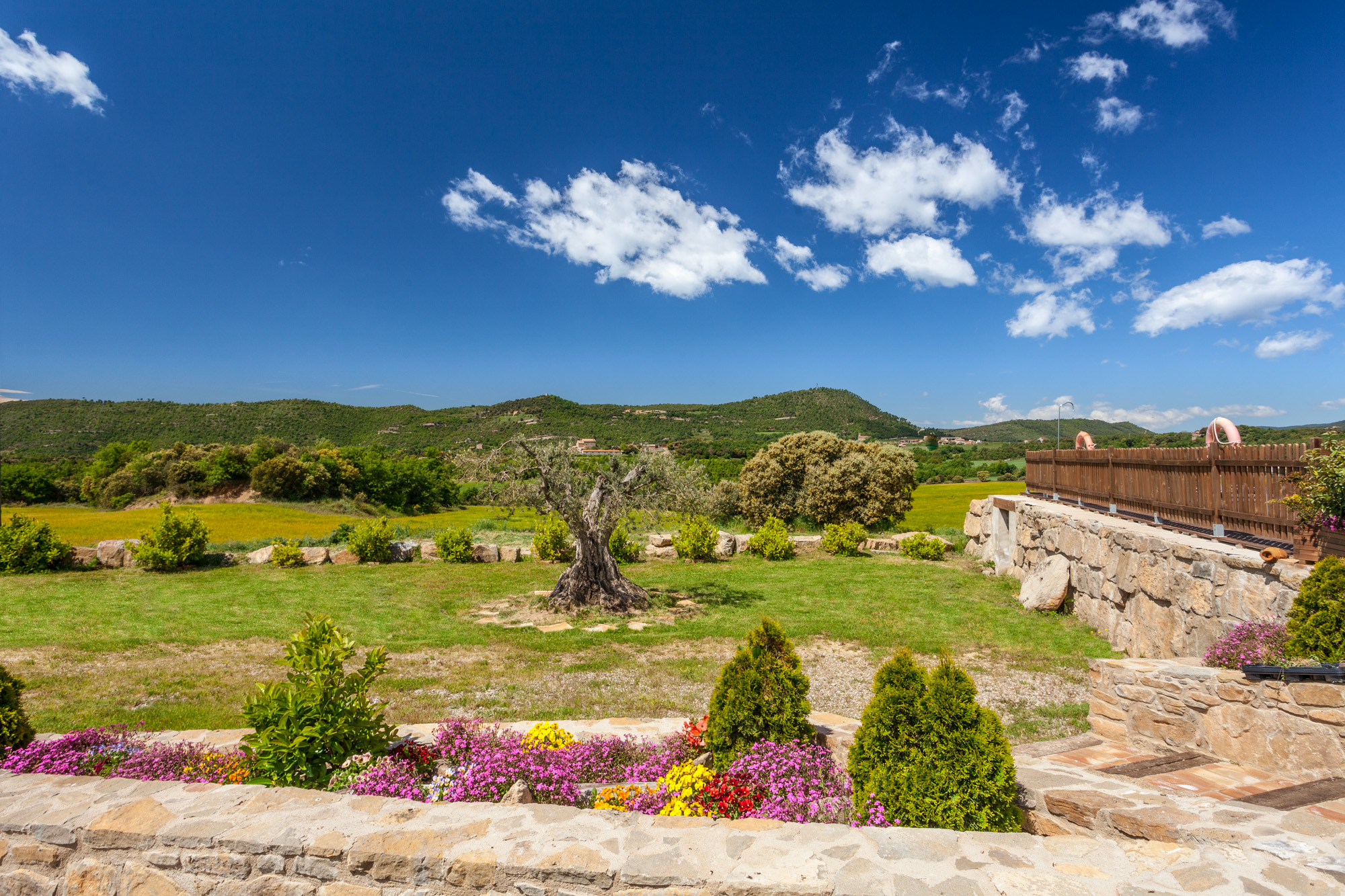
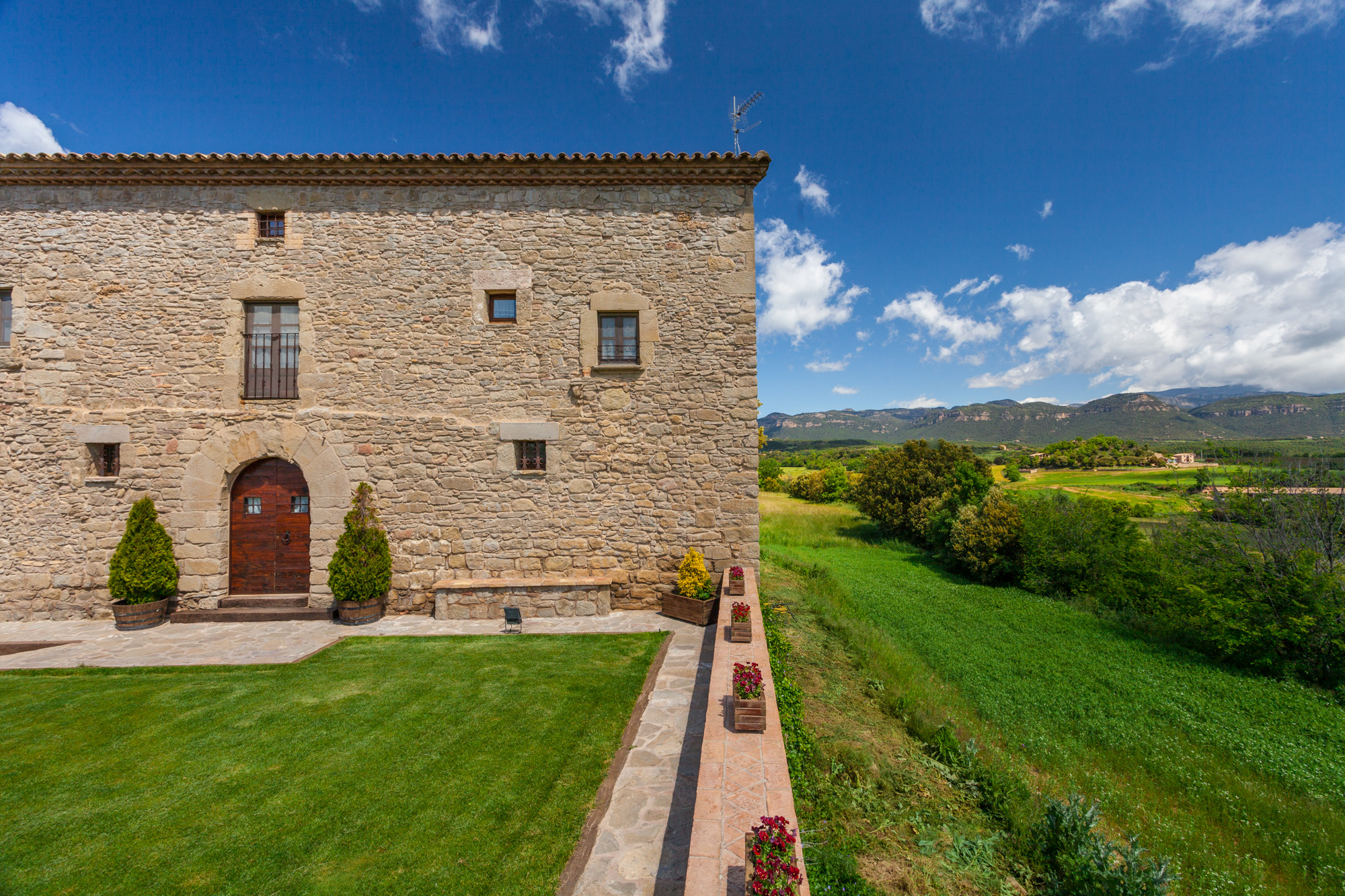
15th-century farmhouse with indoor pool, ideal for groups of up to 20 guests
Check availability