Pablo Picasso spent ten weeks in Gósol during summer 1906—a brief period that art historians identify as the pivot between his Rose Period sentimentality and the radical formal experiments leading to Cubism. The conjunction of factors in this remote Berguedà village created conditions impossible to replicate: geographic isolation, exposure to medieval art, and immersion in pre-industrial rural life. What happened in Gósol that summer changed the trajectory of 20th-century art.
Journey to Isolation: Accessing Gósol in 1906
In June 1906, Picasso and his partner Fernande Olivier departed Paris seeking escape from artistic stagnation and personal complications. They travelled by train to Guardiola de Berguedà, then endured a day-long mule trek along mountain paths—the only access to Gósol at 1,423 metres elevation.
This isolation was deliberate. Picasso was trapped in the Rose Period's decreasing returns—circus performers and harlequins painted with increasing prettiness but diminishing power. Paris offered too many distractions: dealers, critics, competitors. Gósol offered erasure—no electricity, no telephone, no postal service. Communication with the outside world required a day's journey. This enforced solitude created a laboratory.
The village in 1906 contained perhaps 200 inhabitants practicing subsistence agriculture and sheep herding unchanged for centuries. Picasso had removed himself not merely geographically but temporally, stepping into a pre-modern world. This temporal dislocation proved artistically productive—it allowed him to see archaic art not as museum artifacts but as living practice.
The Gósol Virgin: Romanesque as Proto-Modernism
In the village church, Picasso encountered a 12th-century polychrome wooden sculpture: the Mare de Déu de Gósol, a Romanesque Virgin and Child of severe geometry. The sculpture embodied paradoxes that fascinated him:
- Frontality: The Virgin stares directly forward, hieratic, eliminating perspectival depth.
- Schematisation: Facial features reduced to essential elements—almond eyes, linear nose, minimal modelling.
- Conceptual rather than optical: The sculpture represents the idea of Madonna rather than attempting naturalistic portrayal.
This approach paralleled Picasso's emerging interests. He had recently discovered Iberian sculpture at the Louvre (two Iberian heads were later stolen and sold to him, causing a 1911 scandal). He was aware of Paul Gauguin's primitivism, though distrusted its exoticism. The Gósol Virgin offered something different—not colonial appropriation of "exotic" forms, but direct European medieval precedent for anti-naturalistic art.
The sculpture is now in the Museu Nacional d'Art de Catalunya (MNAC) in Barcelona, where its formal relationship to Picasso's 1906-07 work remains visually obvious. The mask-like faces in Les Demoiselles d'Avignon (1907) owe as much to Catalan Romanesque as to African sculpture—a debt Picasso acknowledged in later interviews.
Josep Fondevila: The Model as Archetype
Picasso lodged at Cal Tampanada, an inn run by Josep Fondevila, a 90-year-old retired smuggler. Fondevila became Picasso's obsessive subject—the artist produced numerous drawings, paintings, and gouaches of the old man's face during the Gósol stay.
Fondevila's significance transcends individual portraiture. His weathered face—all planes and angles, minimal flesh over prominent skull structure—provided a living model for the formal reduction Picasso sought. In sequential portraits, Picasso progressively eliminates detail, emphasising geometry over naturalism. The face becomes topography, all ridges and valleys.
This process parallels Cézanne's dictum to "treat nature by means of the cylinder, the sphere, the cone"—but Picasso was working from a human subject, not still life. The Fondevila portraits trace a path from representation toward abstraction, from optical to conceptual. They document a mind learning to see differently.
Fondevila also provided narratives. As former smuggler crossing the Pyrenees at night, carrying contraband tobacco and coffee, he embodied the archaic Mediterranean masculinity Picasso admired—resourcefulness, toughness, indifference to bourgeois morality. These qualities suffuse the portrait series.
The Gósol Harvest: Prologue to Revolution
Picasso produced approximately 200 works during ten weeks in Gósol—an extraordinary rate. The chronology traces clear evolution:
- Early June: Paintings retain Rose Period palette and soft modelling. La Toilette shows Fernande in gentle pinks.
- July: Palette shifts toward earth tones—ochres, terracottas, browns. Figures become more massive, sculptural. Two Brothers shows simplified forms with increased monumentality.
- August: Radical simplification accelerates. Faces elongate into masks. Self-Portrait with Palette shows the artist with enlarged eyes, flattened features.
By departure in August (they fled a typhoid outbreak), Picasso had reached the threshold of a new visual language. Back in Paris, he began work on Les Demoiselles d'Avignon, completing it in 1907. This painting—five nude prostitutes rendered as fragmented, mask-faced figures—detonated Cubism. Georges Braque saw it and declared: "It was as if someone had drunk kerosene and spat fire." Together, Picasso and Braque would develop Cubism through 1914, fracturing and reconstructing representation itself.
But the foundations were laid in Gósol. Without those ten weeks—without the Virgin, without Fondevila, without the isolation and the medieval stones—20th-century art follows a different path.
The Centre Picasso de Gósol presents reproductions and documentation of the 1906 stay. The building faces the Pedraforca, the forked mountain whose angular geometry echoes in Cubist fracturing. From La Tor de Montclar, Gósol lies 30 km north via mountain roads—approximately 45 minutes. The village retains its stone architecture and alpine character, though mule paths are now paved and Cal Tampanada is a small museum.
Practical information
30 km to Gósol (45 min drive)
Discover Berguedà from La Tor de Montclar
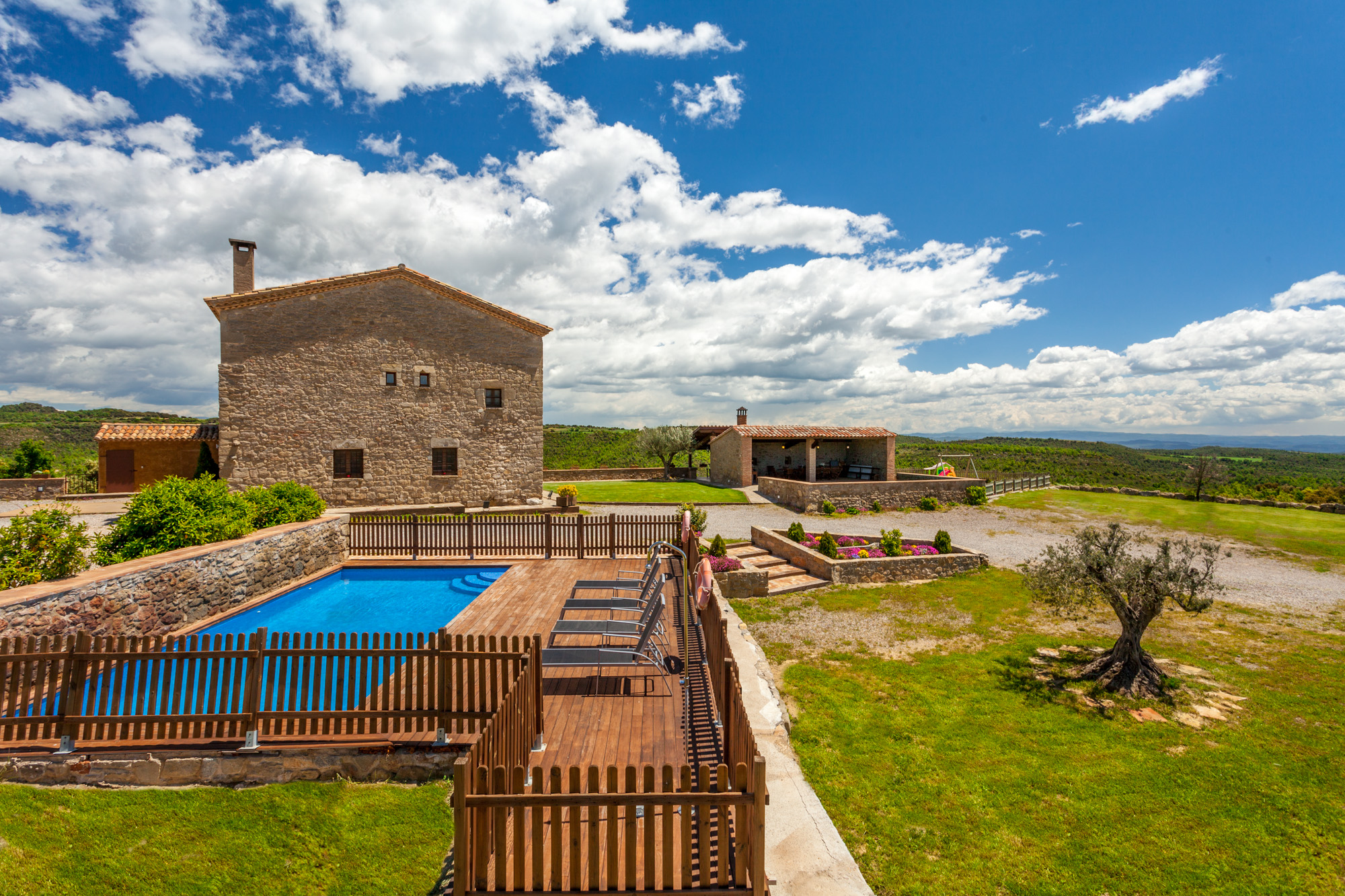
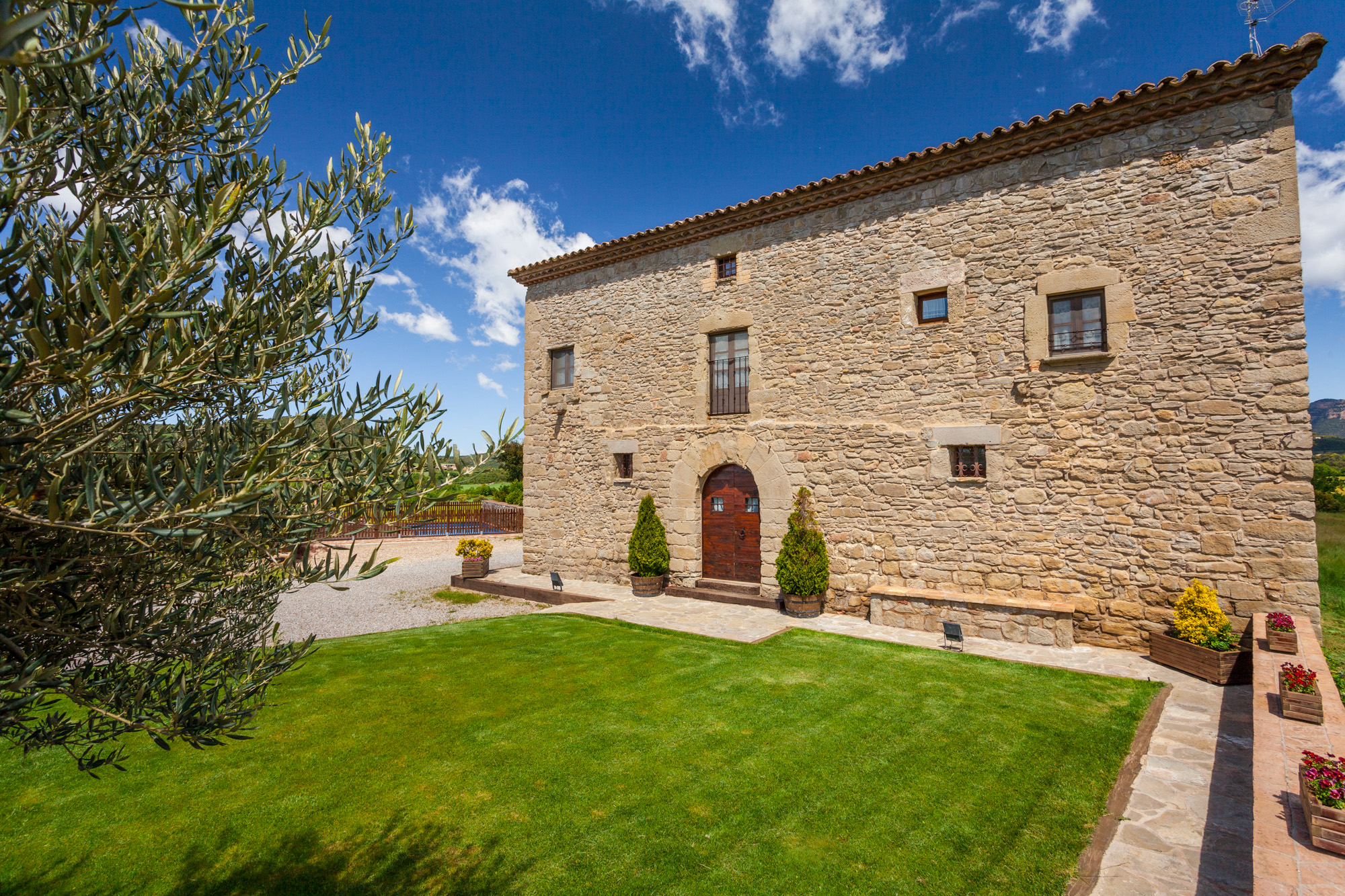
15th-century farmhouse with indoor pool, ideal for groups of up to 20 guests
Check availability