The Berguedà contains one of Catalonia's highest densities of Romanesque religious architecture—dozens of hermitages, chapels, and small churches scattered across the landscape, often in dramatic settings on ridges, beside springs, or overlooking valleys. Built primarily between 1000-1250 CE, these structures represent the Christianisation of rural space during the High Middle Ages, but they also reveal patterns of settlement, land use, and the integration of sacred geography into subsistence economies.
Catalan Romanesque: Style, Chronology, and Characteristics
Catalan Romanesque architecture flourished roughly 950-1250 CE, during the Reconquista—the Christian reconquest of territories from Islamic control—and the subsequent consolidation of Christian counties into what became the Crown of Aragon. The Berguedà, liberated from Islamic control by the late 9th century, experienced intensive church construction during the 10th-12th centuries as populations grew and settlements expanded.
Defining characteristics of Berguedà Romanesque include:
- Plan: Simple rectangular nave with semicircular apse (àbsis) at the east end (altars faced Jerusalem). Larger churches have three naves; hermitages typically have single naves.
- Construction: Load-bearing stone masonry walls (40-80 cm thick) supporting timber roof structures. Wealthier churches used barrel vaulting (stone arched ceilings); poorer hermitages used wood.
- Decoration: Lombard bands—vertical pilaster strips connected by blind arcades—decorating exterior walls, especially apses. This decorative system originated in northern Italy (Lombardy) and spread across the western Mediterranean during the 11th century.
- Bell towers: Freestanding or integrated towers (campanars) with small openings minimising load. Bells regulated daily life—calling villagers to mass, marking work hours, warning of danger.
- Murals: Interior walls were plastered and painted with biblical scenes. The Berguedà produced exceptional Romanesque murals, many now in Barcelona's MNAC museum after early 20th-century removal (controversial today but motivated by preservation concerns—many hermitages were deteriorating).
The style is characterised by massiveness, simplicity, and clarity—qualities reflecting both aesthetic preferences and structural limitations. Pre-Gothic architecture lacked flying buttresses to resist lateral thrust, necessitating thick walls and small windows. The result is architecture of profound solidity, harmonising with the mountain landscape's scale.
Emblematic Sites: A Selection of Notable Hermitages
The Berguedà's Romanesque heritage includes hundreds of structures, ranging from major churches to tiny chapels. Key examples:
- Santuari de Queralt (Berga): Perched on a cliff at 1,200m overlooking Berga, Queralt is the Berguedà's most important Marian sanctuary. The current structure dates to the 17th century (replacing an earlier Romanesque church destroyed in 1571), but the site's sacred significance is medieval. The sanctuary houses a 13th-century polychrome Virgin sculpture, focus of pilgrimage especially during the September 8 festival. The dramatic setting—accessible via a winding road or footpath ascending 600m from Berga—exemplifies how sacred sites often occupied liminal spaces between valley settlements and alpine wilderness.
- Sant Quirze de Pedret (Cercs): A pre-Romanesque/early Romanesque church (9th-10th century) notable for exceptional mural paintings discovered in 1937. The murals, now in Solsona's Diocesan Museum and Barcelona's MNAC, include rare pre-Romanesque iconography with strong Byzantine influence—indicating connections between Pyrenean regions and Mediterranean artistic currents. The church's location beside the Llobregat and near the Pedret bridge suggests it served both religious and hospitaller functions for travellers.
- Sant Vicenç de Rus (Castellar de n'Hug): A 12th-century church in the upper Llobregat valley demonstrating classic Romanesque features: single rectangular nave, semicircular apse with Lombard band decoration, barrel vault interior. The church sits beside the road to the Fonts del Llobregat, likely serving pilgrims visiting the springs. Its modest scale indicates a small parish serving scattered farmsteads rather than a concentrated village.
- Santa Maria de Lillet (La Pobla de Lillet): Remains of a Benedictine monastery founded 10th century. The surviving church (partially ruined) includes a 10th-century crypt—an underground chapel with barrel-vaulted ceiling supported by short columns. Crypts served to elevate the altar above ground level and sometimes housed relics. The monastery was abandoned in the 15th century as monastic populations declined; the church was partially preserved and is now visitable.
These sites demonstrate functional hierarchy: from major sanctuaries (Queralt) to parish churches (Sant Vicenç) to monastic communities (Santa Maria) to isolated hermitages serving single farmsteads or shepherds. Each level reflects different settlement densities and economic resources.
Sacred Landscape: Hermitages as Spatial Practice
Hermitages were not arbitrarily located; their placement reveals medieval spatial practices:
- Boundary markers: Hermitages often marked municipal or parish boundaries. Sant Martí del Faig, for example, sits on the boundary between Bagà and Guardiola municipalities, functioning as a territorial anchor.
- Viewpoint positions: Many hermitages occupy elevated positions with wide vistas. This served defensive purposes (visibility = early warning of approaching threats) and symbolic purposes (height = proximity to heaven).
- Water associations: Hermitages frequently sit near springs. This practical necessity (water for hermits and pilgrims) merged with sacred associations—springs as liminal spaces between underground (underworld) and surface (human realm), making them appropriate for religious architecture.
- Pre-Christian continuity: Some hermitage locations may preserve earlier sacred sites. Toponymic evidence (place names) occasionally suggests pre-Christian associations, though proving continuity is difficult. The practice of building churches atop earlier pagan sites was deliberate church policy, baptising pagan landscapes.
The spatial distribution also relates to economic geography:
- Transhumance routes: Hermitages near summer pastures served shepherd communities during seasonal occupation. Sant Martí del Puig (above Bagà) sits near historic summer grazing areas.
- Communication routes: Hermitages along royal roads (camins rals) provided rest stops. Some had attached hospitals (traveller shelters), offering basic accommodation and care.
- Agricultural zones: Parish churches concentrated in valley bottoms where arable land supported larger populations. Higher-elevation hermitages reflected more dispersed pastoral settlement.
This pattern makes hermitage distribution a proxy for reconstructing medieval land use—mapping churches maps settlement and economy.
Visiting Routes: Romanesque Circuits and Practical Access
Several routes facilitate Romanesque exploration:
- Bagà Romanesque Route: A 6 km walking circuit from Bagà (parking in main square) visiting Sant Esteve de Bagà (parish church), Sant Martí del Faig (1.5 km south), and ermita de Sant Marc (2 km east). The route combines Romanesque architecture with medieval town exploration (Bagà preserves arcaded streets, noble houses, defensive walls). Allow 4-5 hours including church visits and town exploration.
- Upper Llobregat Route (by car): Castellar de n'Hug → Sant Vicenç de Rus (1 km) → Fonts del Llobregat (2 km) → La Pobla de Lillet → Santa Maria de Lillet monastery (0.5 km from town) → Pedret bridge and Sant Quirze de Pedret (15 km). Total driving: 25 km; allow half-day with stops at each site.
- Queralt Pilgrimage: The traditional pilgrimage from Berga to Queralt sanctuary follows a 5 km footpath ascending 600m. The path is well-maintained with Stations of the Cross marking the route. Allow 2.5 hours ascent, 1.5 hours descent. Alternatively, drive to Queralt (7 km, 15 min via paved road).
Practical considerations:
- Access: Most hermitages are unlocked during daylight hours, though some may be closed. Parish offices in Berga or Bagà can provide keys or arrange access.
- Festivals: Many hermitages host annual aplecs—festive gatherings combining mass, picnic, and socialising. Attending an aplec offers cultural insight: these gatherings maintain living traditions connecting contemporary communities to medieval sacred geography. Major aplecs include Queralt (September 8), Sant Martí del Puig (November 11), Sant Vicenç de Rus (June 24).
- Photography: Romanesque interiors are dim (small windows). Wide-angle lens useful for capturing nave and apse in single frame. Exterior shots benefit from oblique light (early morning or late afternoon).
From La Tor de Montclar:
- Queralt sanctuary: 20 km south (25 min by road)
- Sant Quirze de Pedret: 22 km south (30 min)
- Bagà Romanesque route: 18 km north (25 min to trailhead)
- Upper Llobregat route start: 35 km north (40 min to Castellar de n'Hug)
The density of accessible sites within 45 minutes makes the Berguedà ideal for Romanesque exploration, offering comparative study of architectural variations, site-selection logic, and the relationship between sacred architecture and landscape topography.
Practical information
15-35 km to major sites (20-40 min)
Discover Berguedà from La Tor de Montclar
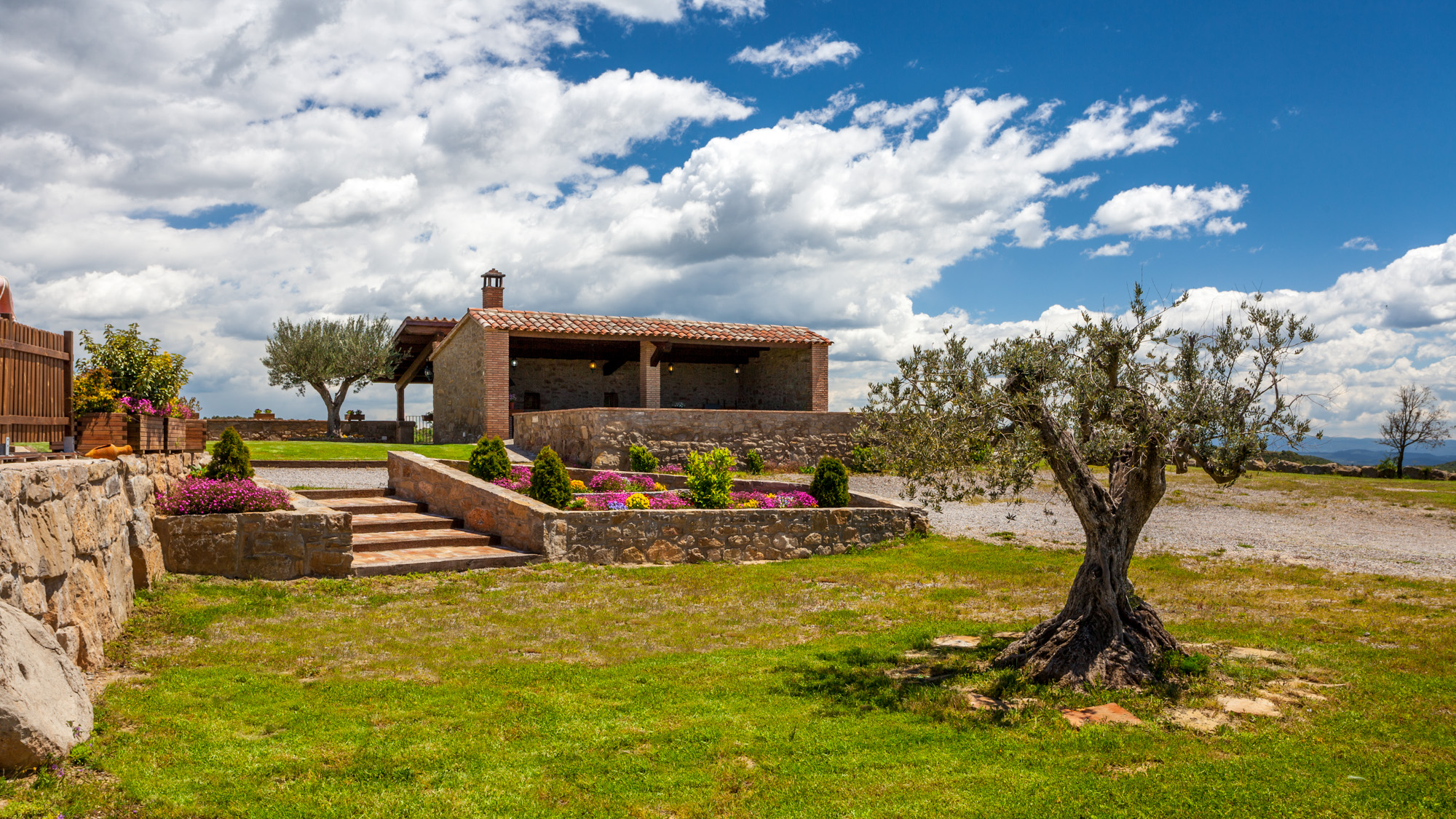
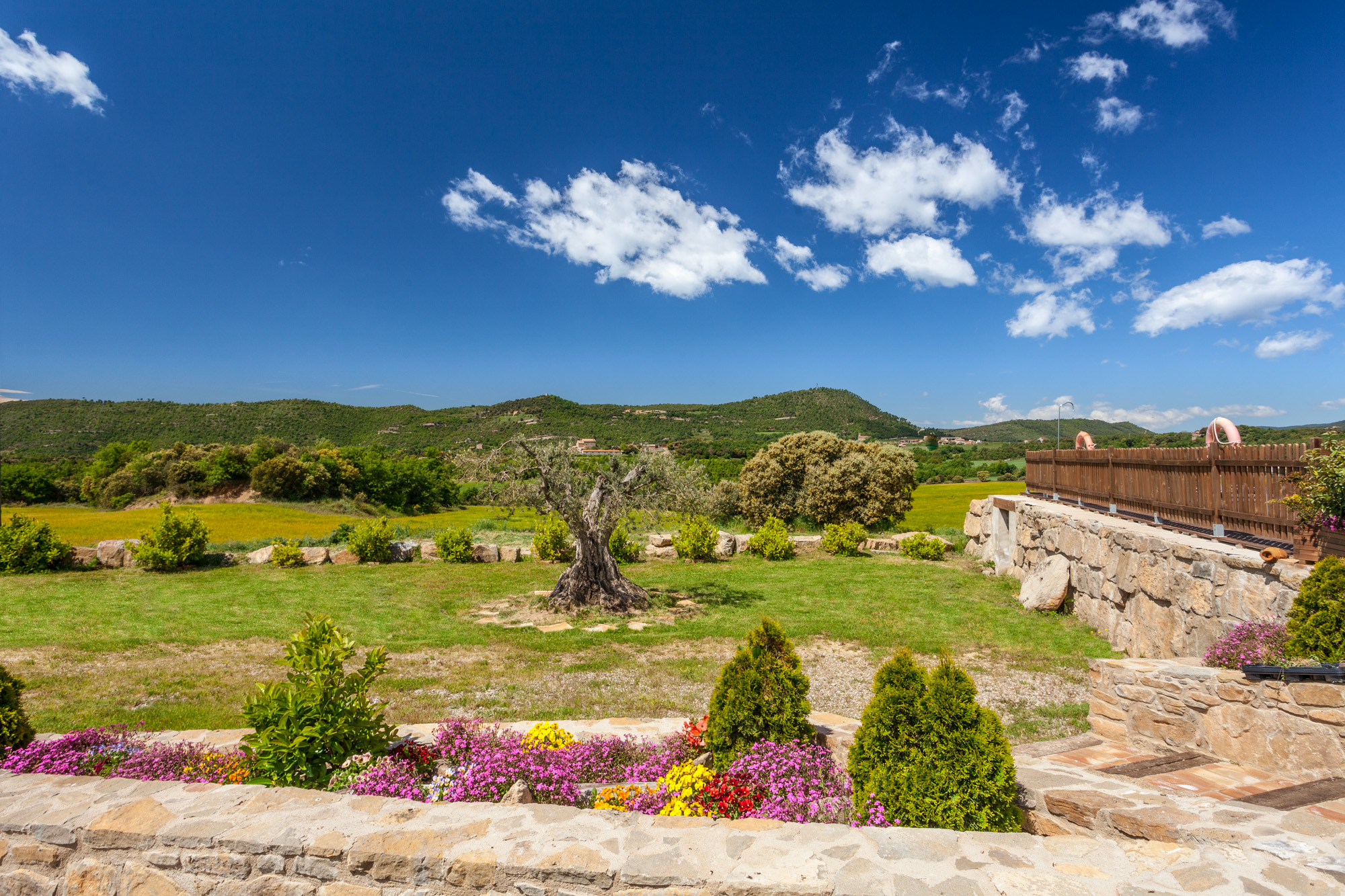
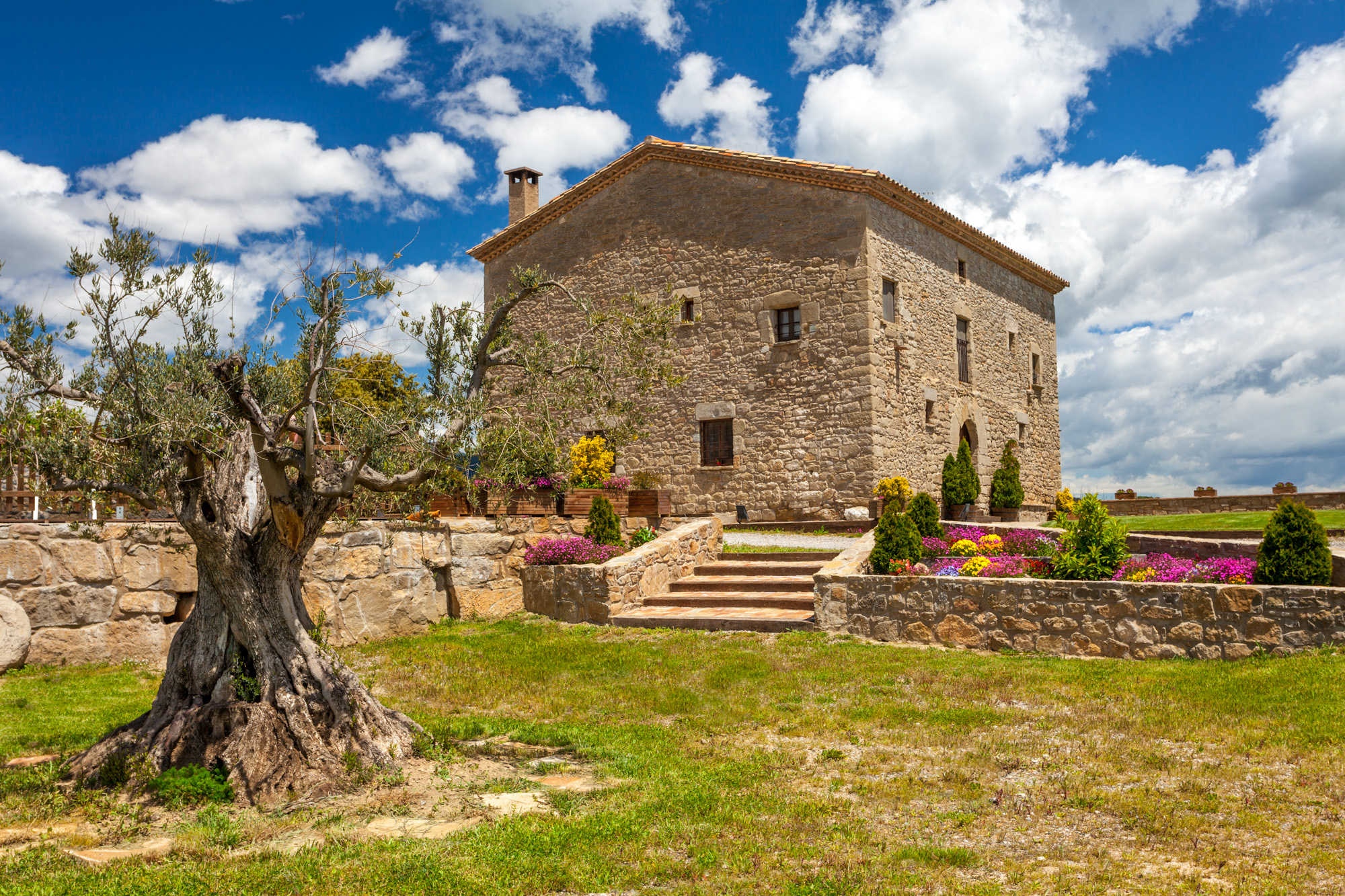
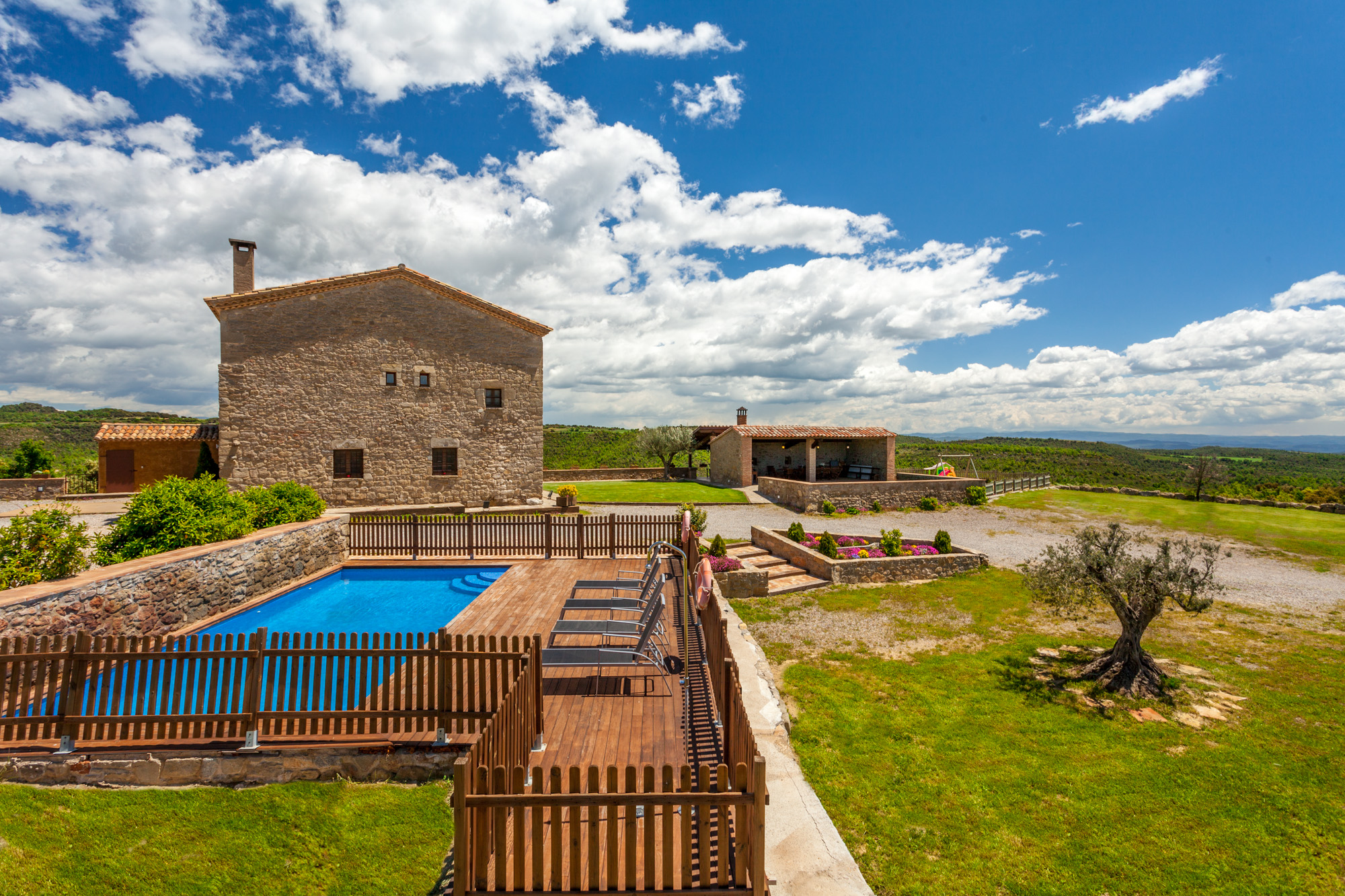
15th-century farmhouse with indoor pool, ideal for groups of up to 20 guests
Check availability