Certain trees in the Berguedà have achieved monumental status—not merely through size, but through the intersection of longevity, cultural significance, and ecological function. These centuries-old specimens serve as living archives: their annual growth rings record climate variations, their cavities shelter endangered species, and their presence in landscape creates continuity connecting contemporary communities with ancestors who walked beneath the same branches. A monumental tree is both organism and monument.
Defining Monumentality: Biology Meets Culture
The Catalan government maintains a Catàleg d'Arbres Monumentals (Catalogue of Monumental Trees) identifying specimens meriting legal protection. Criteria include:
- Dimensions: Trunk perimeter thresholds varying by species (e.g., oaks >6 metres perimeter, beeches >5 metres, pines >4 metres measured at 1.3m height). These dimensions typically indicate ages exceeding 200-300 years.
- Age: Estimated minimum ages (direct aging requires core sampling, which damages trees; most ages are estimated from growth rates).
- Rarity: Species uncommon in the region, or individuals with unusual growth forms (multi-trunk specimens, extremely contorted boles).
- Cultural significance: Trees associated with historical events, mentioned in literature, or serving as community landmarks (village meeting points, boundary markers).
- Ecological value: Trees providing critical habitat—old oaks with extensive cavity systems shelter bats, owls, and beetles found nowhere else.
Monumental status provides legal protection: cutting prohibited, surrounding soil protection zones established (to prevent root damage from construction), and management plans required for any interventions.
The concept of monumental trees reflects contemporary environmental values but also continues medieval traditions. Boundary oaks, chapel trees (religious images placed in trunk hollows), and assembly trees (where village councils met) all established individual trees as culturally significant. Today's protections formalise this tradition.
Beech Forests: Temperate Rainforest Ecology
The Berguedà's beech forests (fagedes) represent the southern extent of European beech (Fagus sylvatica) distribution. Beeches require cool, moist conditions—they thrive on north-facing Cadí and Pedraforca slopes where summer heat is moderated and winter snow provides moisture.
Notable beech groves include:
- Fageda de la Grevolosa (Gósol): A mature forest at 1,600-1,800m elevation containing specimens estimated at 200+ years. The beeches here show characteristic mountain adaptations: short stature (10-15m vs. 30-40m for lowland beeches), twisted trunks from snow load and wind stress, and dense canopies. The forest floor in autumn is covered with fallen leaves that decompose slowly in the cool climate, creating thick duff layers.
- Cadí north slope beech forests: Extensive forests between 1,200-1,800m on shaded slopes. These represent near-pristine temperate deciduous forest—minimal human intervention beyond occasional selective logging. The understory includes rare species like Daphne laureola (spurge laurel) and various orchids.
Beech forest ecology:
- Mast years: Beeches produce heavy seed crops (faigs, beechnuts) irregularly—roughly every 3-7 years. This strategy, called masting, overwhelms seed predators (mice, wild boar) in mast years, allowing some seeds to germinate. Non-mast years starve predator populations.
- Shade tolerance: Beech seedlings tolerate deep shade, allowing regeneration beneath parent canopies. This creates even-aged forests where all trees germinated during the same window following disturbance (fire, wind storm, clearcutting).
- Autumn colour: Beech leaves turn yellow-orange-brown in October-November, creating the colour displays attracting photographers. The colour derives from carotenoid pigments revealed when chlorophyll breaks down.
Climate change threatens beech forests. Rising temperatures and more frequent droughts stress trees adapted to cool, moist conditions. Dieback has been observed in some southern European beech populations; the Berguedà's higher elevation may provide refuge as lowland forests become unsuitable.
Oaks and Other Broadleaf Species: Ecological Keystone Trees
Oak species in the Berguedà include Quercus pubescens (downy oak) and Quercus ilex (holm oak, an evergreen). Oaks tolerate drier, warmer conditions than beeches, dominating lower elevations and south-facing slopes.
Monumental oaks often exceed 5 metres trunk perimeter and 300+ years age. These ancient specimens provide critical ecosystem services:
- Cavity habitat: Old oaks develop extensive hollows from heartwood decay (which doesn't affect structural integrity—sapwood still transports water and nutrients). These cavities shelter European wildcats, genets, owls (especially Tawny Owl, Strix aluco), and numerous bat species. Saproxylic beetles (species dependent on dead wood) also require old-growth cavities.
- Acorn production: Ancient oaks produce abundant acorns supporting wild boar, deer, squirrels, and jays. Historically, acorns were collected for pig fodder (pannage rights—the right to graze pigs beneath oak forests—were economically valuable in medieval Catalonia).
- Cultural landmarks: Isolated oaks in pastures or beside paths often served as meeting points or boundary markers. Many survive as protected specimens even when surrounding land uses have changed.
Other significant broadleaf species:
- Yew (Taxus baccata): A slow-growing conifer (despite being an evergreen, it's not a pine) that can live 1,000+ years. Yews are rare in the Berguedà, found in shaded ravines. All parts except the fleshy red aril (seed covering) are highly toxic. Medieval longbows were made from yew wood, leading to widespread harvesting and population declines.
- Lime/Linden (Tilia spp.): Occasional specimens in valley bottoms. Limes were traditionally planted near churches and public buildings; their fragrant June flowers attract bees.
Pines and Conifers: High-Elevation Survivors
The Berguedà's coniferous forests include several pine species occupying different elevational niches:
- Scots pine (Pinus sylvestris): The most widespread pine, found 800-1,800m. Characterised by orange-red bark on upper trunk. Scots pine forests were extensively logged historically (construction timber, fuel), so most stands are secondary regrowth (100-150 years old). Rare old-growth specimens exceeding 300 years exist in inaccessible locations.
- Black pine (Pinus uncinata): The high-elevation pine, found 1,600-2,400m, extending to treeline. Adapted to extreme conditions: heavy snow loads, high winds, short growing seasons. Black pines grow slowly—a 50 cm diameter tree may be 200 years old. The species' curved (uncinata) cones distinguish it from other pines.
- Maritime pine (Pinus pinaster): Plantations at lower elevations, not native to the Berguedà but introduced for reforestation projects during the Franco era (1940s-1970s). These plantations are ecologically simplified compared to native forests.
Monumental pines in the Berguedà often survive because of inaccessibility (steep slopes, rocky terrain) or cultural protection (trees near chapels or hermitages were traditionally spared from logging). The largest black pines, found above 2,000m, show krummholz (stunted, wind-deformed) growth forms—their survival at treeline makes them remarkable despite modest size.
Visiting Monumental Trees: Routes and Identification
Several itineraries facilitate monumental tree discovery:
- Fageda de la Grevolosa route: From Gósol village (parking available), a 4 km trail (2 hours round-trip) ascends to the beech forest. The path is well-marked; interpretive panels identify tree species and explain forest ecology. Best visited October-November for autumn colour.
- Cadí beech forests: Multiple access points via trails from Bagà, Bellver, or Saldes. The GR 150 (long-distance trail circling the Berguedà) passes through extensive beech forests on the Cadí north slope. Any section of this trail offers monumental tree encounters.
- Village boundary oaks: Many villages retain ancient oaks marking historical boundaries. Local tourist offices can provide locations. These trees are often isolated in pastures or beside roads, easily accessible.
Identification tips:
- Beech: Smooth grey bark (unlike oak's fissured bark), oval leaves with wavy margins, nuts in spiny husks.
- Oak: Deeply fissured bark, lobed leaves, acorns in cups.
- Scots pine: Needles in pairs, orange upper bark, symmetrical cones.
- Black pine: Needles in pairs, dark bark, curved asymmetrical cones.
Photography considerations: Monumental trees are most photogenic when:
- Isolated (clear of competing vegetation), allowing appreciation of form.
- Backlit (sun behind tree), creating rim lighting on canopy.
- Photographed with wide-angle lenses to capture both trunk base and canopy in single frame—requires stepping back.
Tree measurement (for the curious): To estimate trunk circumference without a tape, use the embrace method—extend arms around trunk; each arm-span approximates 1.6 metres for average adults. Most people cannot embrace trees exceeding 5 metres circumference (requiring 3+ people linking arms).
From La Tor de Montclar:
- Fageda de la Grevolosa: 30 km north (45 min to Gósol trailhead)
- Cadí beech forest access points: 20-35 km (30-50 min to various trailheads)
- Local village oaks: inquire at Montclar or Berga for specific locations
Autumn (October-November) is optimal for tree visits—deciduous species display peak colour, atmospheric clarity is high, and temperatures are comfortable for hiking. Spring (May-June) offers fresh green leaves and wildflower understory but muddier trail conditions from snowmelt.
Practical information
5-35 km to monumental tree sites (10-45 min to trailheads)
Discover Berguedà from La Tor de Montclar
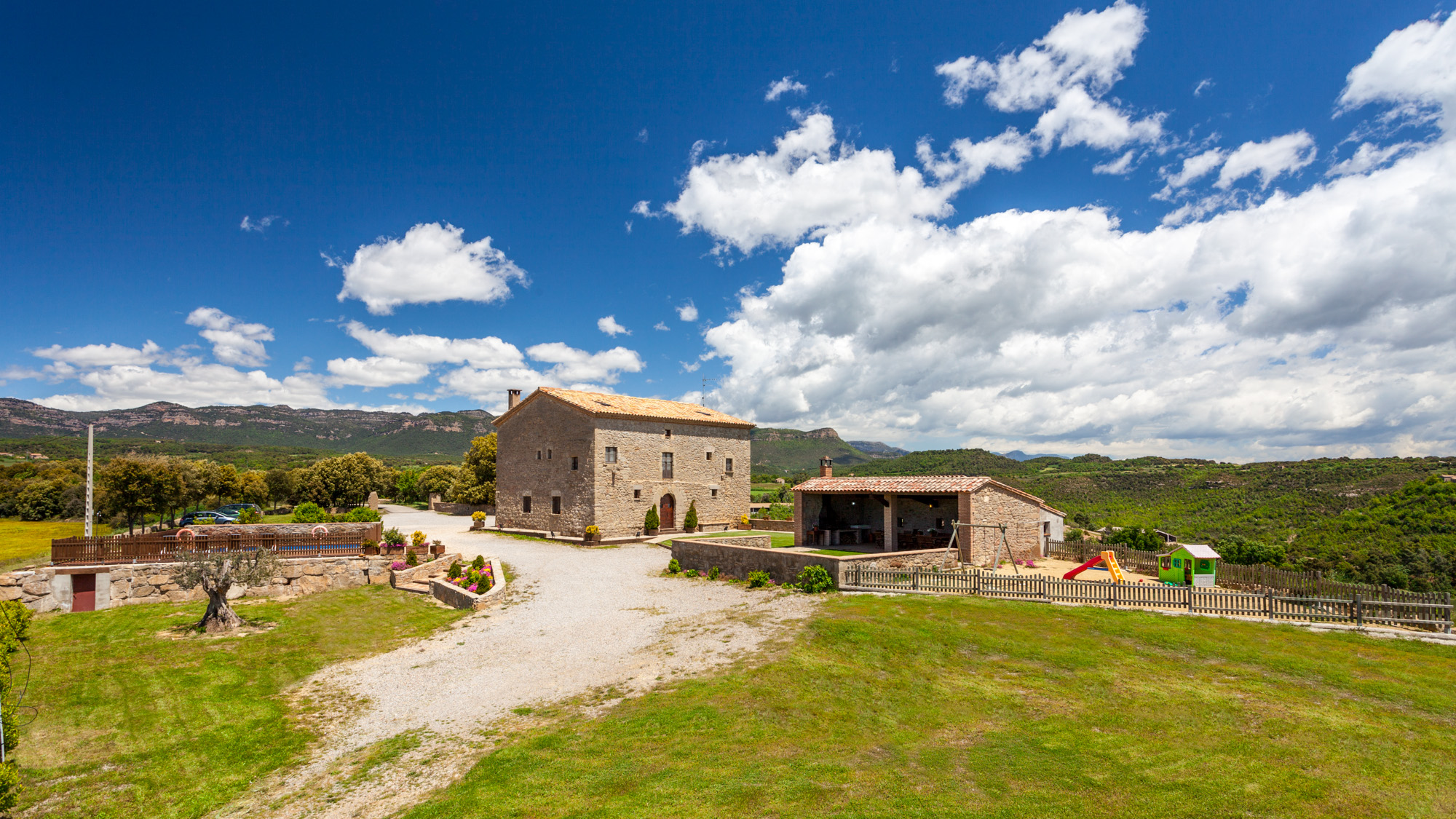
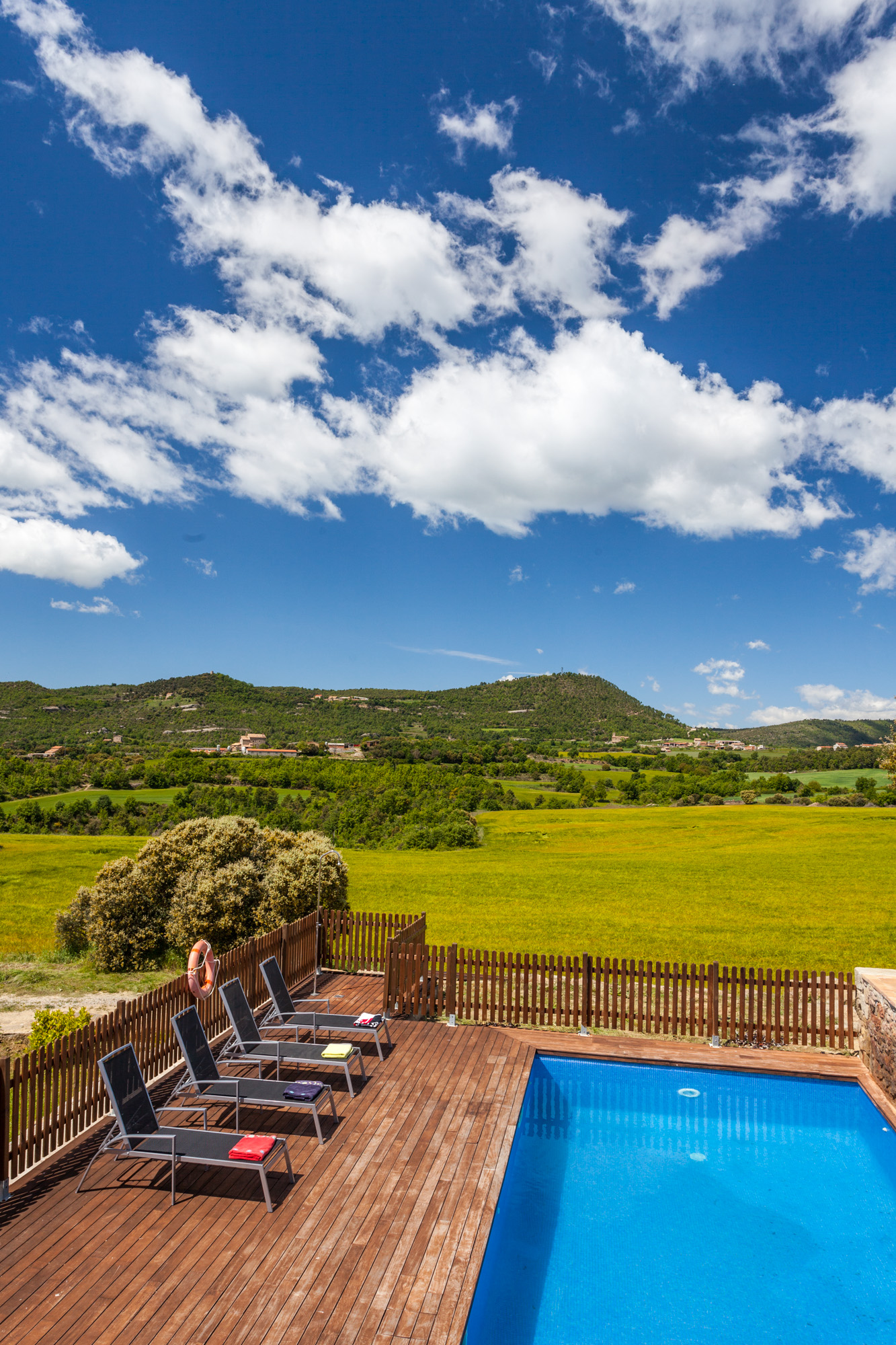
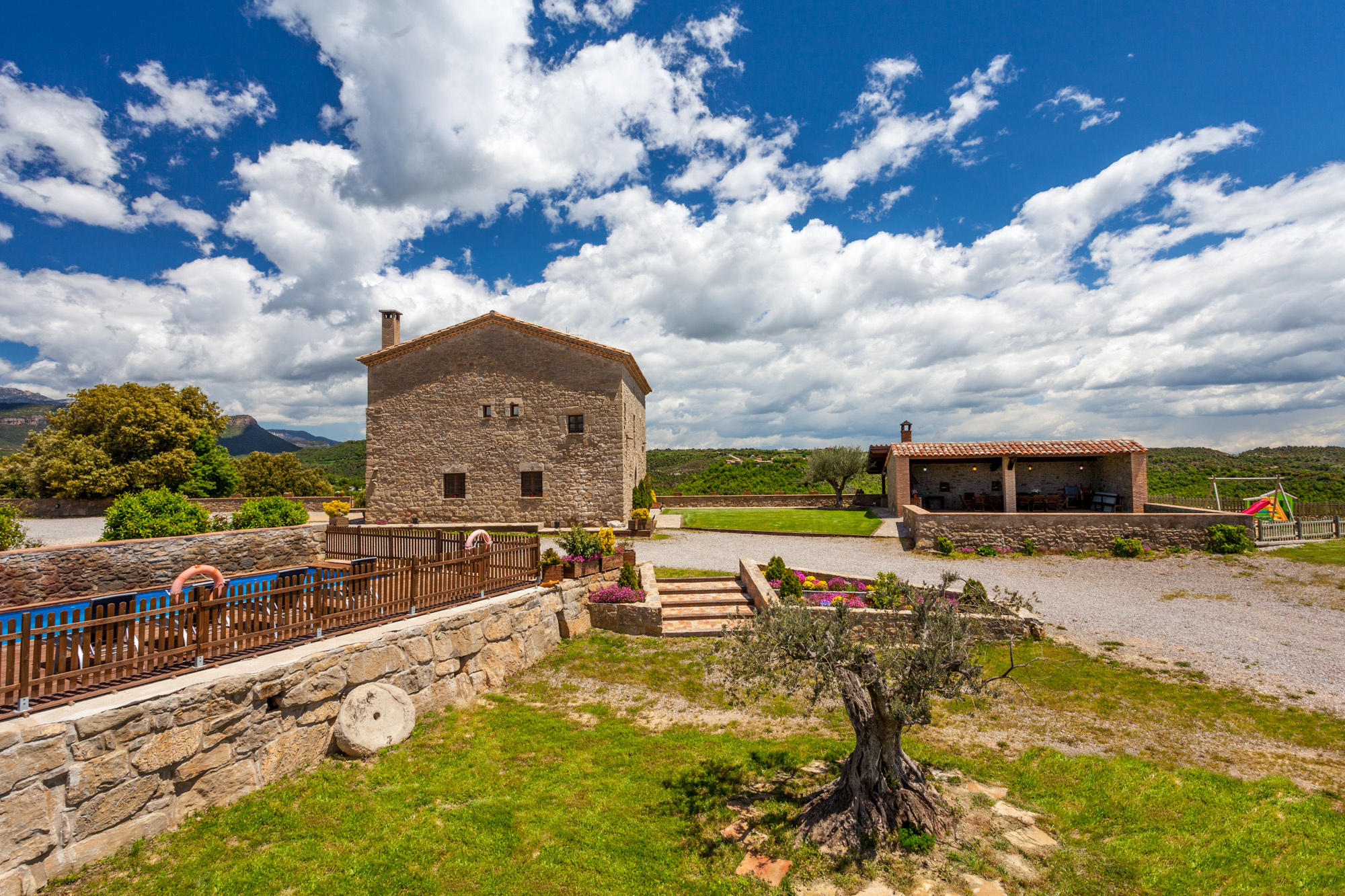
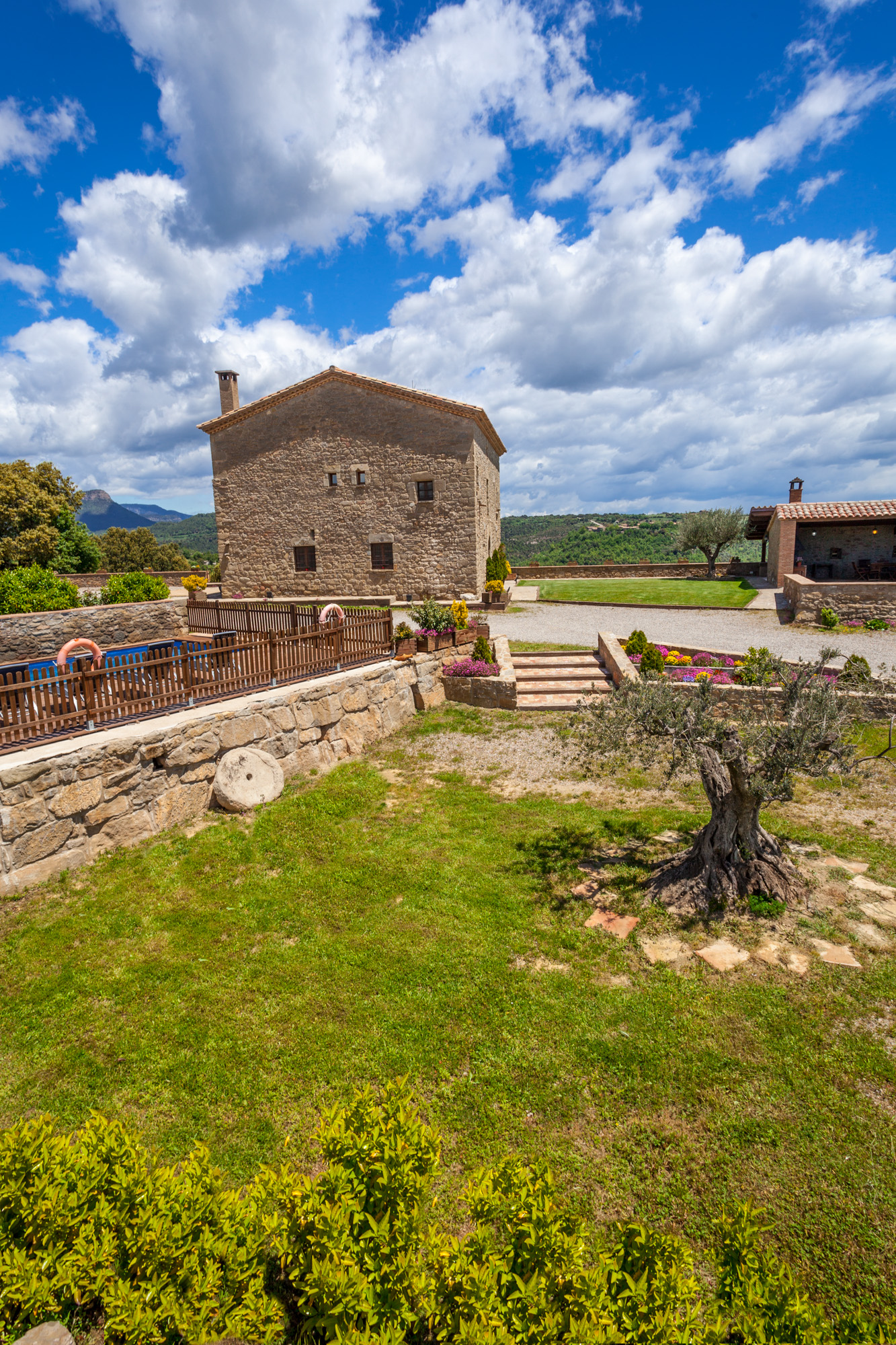
15th-century farmhouse with indoor pool, ideal for groups of up to 20 guests
Check availability