In much of Europe, light pollution erases the night sky. Urban glow obscures all but the brightest stars; the Milky Way—humanity's home galaxy, visible as a luminous band across the sky—vanishes entirely. The Berguedà, with its low population density, minimal urban development, and mountain elevation, preserves genuinely dark skies. On moonless nights from high viewpoints, the sky reveals what our ancestors saw nightly but most contemporary humans never experience: thousands of stars, the Milky Way's structure, planets, and the profound vastness of the cosmos.
Understanding Light Pollution: The Dimming of the Night
Light pollution is excess artificial light that scatters in the atmosphere, creating sky glow that obscures celestial objects. Sources include:
- Street lighting: Poorly designed fixtures that emit light upward as well as downward waste energy and create sky glow.
- Urban areas: Cities generate enormous light pollution—Barcelona's glow is visible 100 km distant, creating orange sky glow across much of coastal Catalonia.
- Industrial facilities: Factories, greenhouses, and sports facilities often use intense lighting, contributing disproportionately to local pollution.
Astronomical impacts:
- Reduced visibility: In heavily polluted areas (major cities), only 50-100 brightest stars are visible. In dark-sky locations, 2,000-5,000 stars are visible to naked eye.
- Loss of Milky Way: The Milky Way—our galaxy seen edge-on—requires dark skies. Studies suggest over 60% of Europeans never see it.
- Disrupted circadian rhythms: Excessive artificial light affects human sleep patterns and wildlife behaviour (migrating birds disoriented by city lights, sea turtle hatchlings confused by beachfront lighting).
The Berguedà's dark skies result from:
- Low population density: ~40,000 people across 1,200 km²—among Catalonia's least dense regions.
- Distance from major cities: Barcelona lies 100+ km south; Lleida 80+ km west. This separation reduces sky glow.
- Mountain topography: Ridges block light from distant sources; valleys create pockets of exceptional darkness.
- Limited development: The region lacks large industrial facilities or extensive greenhouse agriculture (major pollution sources elsewhere).
The Bortle Dark-Sky Scale (1-9, with 1 darkest) rates light pollution. Urban cores rate 8-9; suburban areas 5-7; rural locations 3-5. The Berguedà's best sites rate 2-3 (excellent), with remote locations occasionally reaching 1 (exceptional)—comparable to the darkest locations in Spain (western extremadura, Pyrenean high valleys).
Premier Observation Sites: Where to Watch the Sky
Optimal astronomy locations combine darkness, elevation (thinner atmosphere = less scattering), and open horizons:
- Coll de Pal (2,105m): Accessible by paved road from Bagà (25 km, 35 min), this pass offers 360° horizons and minimal nearby light sources. The elevation places observers above much atmospheric moisture, improving transparency. Bortle rating: 2-3. The site includes parking; no facilities. Suitable for visual observation and astrophotography. Winter access requires appropriate vehicle (4WD, snow chains) and extreme caution—the road can be icy and exposed to strong winds.
- Pla d'Anyella (Gósol area, ~1,800m): A high meadow accessible via forest track from Gósol (6 km track, high-clearance vehicle recommended). The south-facing slope offers excellent southern sky views (optimal for observing Milky Way core, visible June-September). Bortle rating: 2. No facilities; requires hiking final 1-2 km if vehicle unsuitable for track.
- Rasos de Peguera (1,400m): An elevated plateau north of Berga, accessible via forest track (10 km from Berga, passenger cars acceptable). The site offers good darkness despite proximity to Berga (15 km)—the intervening ridge blocks most light pollution. Bortle rating: 3-4. Popular with local astronomy groups; occasionally hosts public observation events.
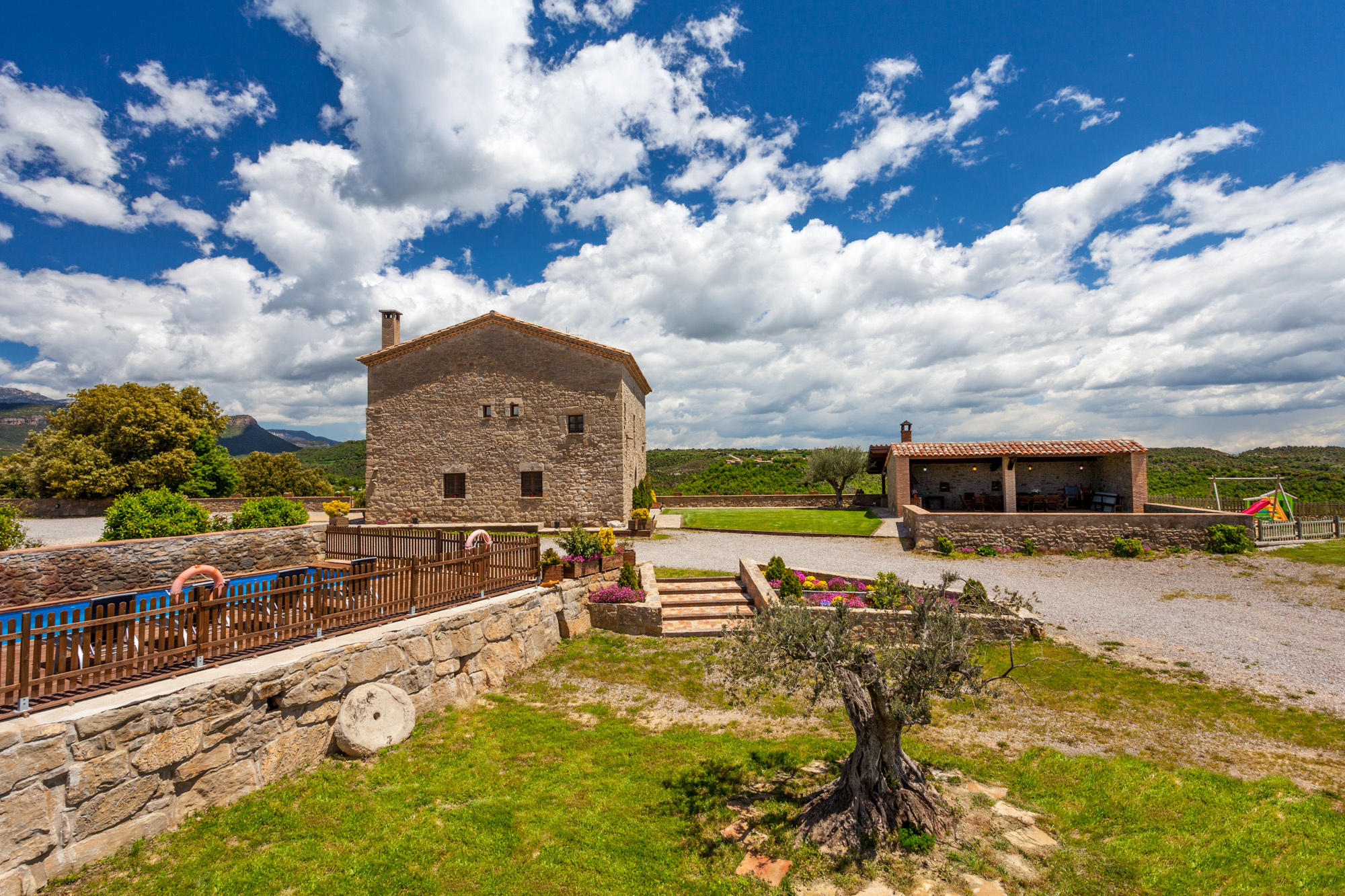
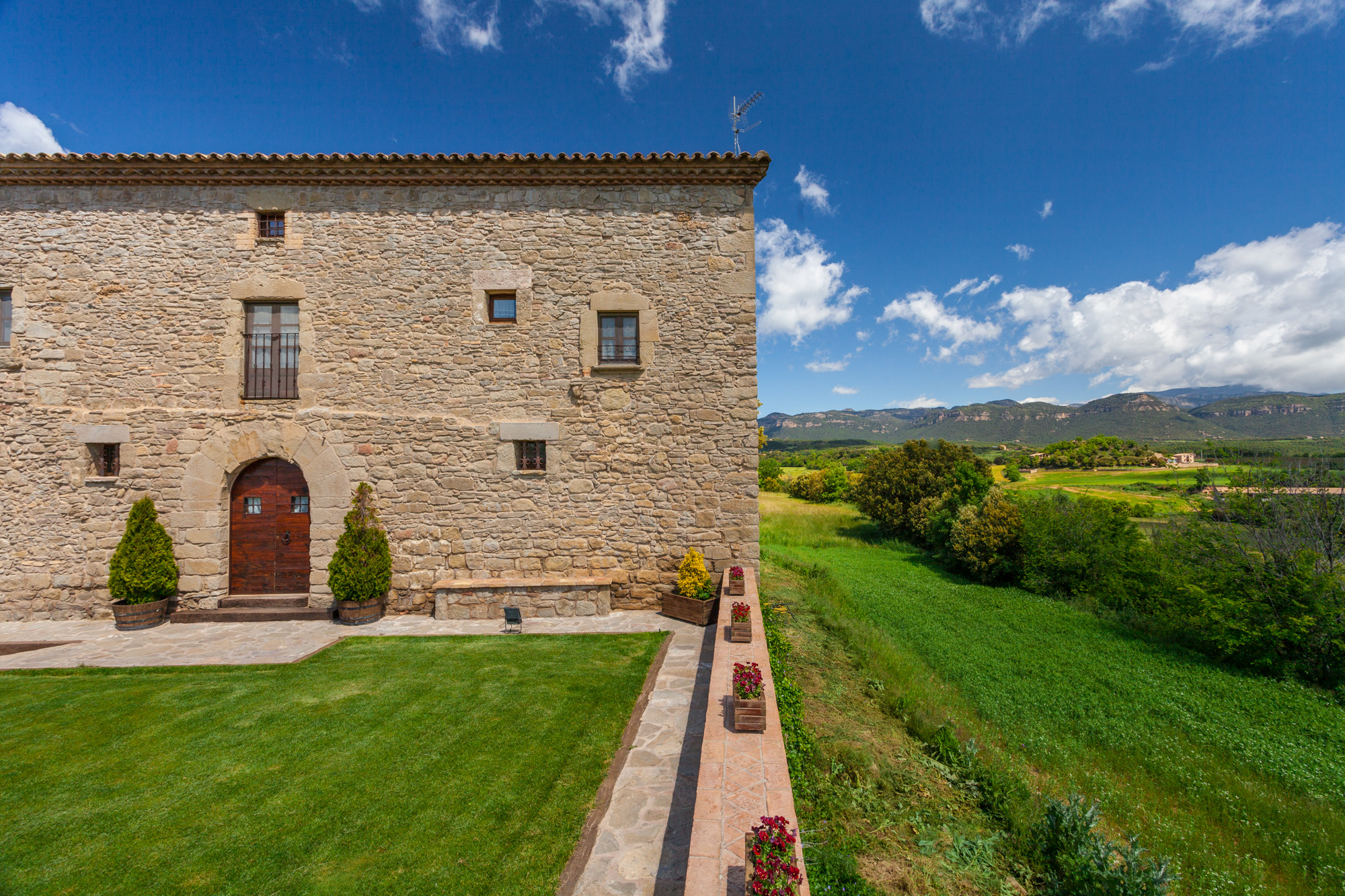
- La Tor de Montclar surroundings (900-1,000m): The immediate area around the farmhouse offers Bortle 3-4 conditions—adequate for Milky Way observation and general stargazing. Simply stepping outside on a clear, moonless night reveals sky quality impossible in urban areas. For serious astronomy, traveling to higher-elevation sites improves conditions, but casual observation from the property is rewarding.
Site selection considerations:
- Moon phase: Full moon illuminates the sky brighter than many cities—avoid ±3 days around full moon for serious observation. New moon periods (moon not visible) are optimal.
- Weather: Cloud cover obviously prevents observation. Check forecasts; meteoblue.com and other services provide cloud-cover predictions. Post-storm conditions often offer best transparency—rain washes atmospheric particulates.
- Seasonal timing: Summer offers warm nights (comfortable observation) but shorter darkness periods (late sunset, early sunrise). Winter provides long darkness but cold temperatures (appropriate clothing essential—temperatures at 2,000m can reach -10°C even when valleys are mild).
What to Observe: Celestial Phenomena Accessible to Amateurs
The Berguedà's dark skies enable observation of numerous phenomena:
- The Milky Way: Our home galaxy, containing 100-400 billion stars, appears as a luminous band crossing the sky. Summer Milky Way (June-September) shows the galactic core toward Sagittarius—dense star fields, dark dust lanes (obscuring clouds blocking background stars), and structural complexity. Winter Milky Way (December-February) shows the outer galactic arm—fainter but still impressive. The Milky Way is best observed 2-3 hours after sunset or before sunrise when it rises high above the horizon.
- Planets: Five planets are visible to naked eye: Mercury (difficult—close to sun), Venus (brilliant "evening star" or "morning star"), Mars (red colour distinctive), Jupiter (brightest after Venus, with moons visible through binoculars), Saturn (yellowish, rings visible with small telescope). Planet positions change; astronomy apps (Stellarium, SkySafari) predict visibility.
- Meteor showers: Earth's orbit intersects debris trails from comets, producing annual meteor showers. Major showers visible from Berguedà include:
- Perseids (August 10-13): Peak ~60 meteors/hour under dark skies. Summer weather = comfortable observation. Extremely popular.
- Geminids (December 13-14): Peak ~120 meteors/hour—best annual shower. December cold limits casual observers but rewards the prepared.
- Lyrids (April 21-22): Moderate shower (~20/hour) in pleasant spring weather.
- Deep-sky objects: Galaxies, nebulae, and star clusters beyond our solar system, requiring binoculars or telescope:
- Andromeda Galaxy (M31): Nearest large galaxy (2.5 million light-years), visible as faint smudge to naked eye, spectacular through binoculars.
- Orion Nebula (M42): Star-forming region 1,350 light-years away, visible in Orion's "sword" as fuzzy patch; binoculars reveal structure.
- Pleiades (M45): Open star cluster ~440 light-years distant, visible as tight grouping of 6-9 stars to naked eye; dozens through binoculars.
- Double Cluster (NGC 869/884): Pair of star clusters in Perseus, stunning through binoculars.
- Artificial satellites: Thousands of satellites orbit Earth; many are visible as moving "stars" crossing the sky in 2-5 minutes. The International Space Station (ISS) is brightest, rivaling Venus. Websites (heavens-above.com) predict ISS passes for specific locations.
Practical Astronomy: Equipment, Techniques, and Safety
Successful observation requires minimal equipment but significant preparation:
- Essential gear:
- Red flashlight: Red light preserves night vision (eyes require 20-30 minutes to fully dark-adapt; white light instantly destroys adaptation). Purchase astronomy red flashlights or cover standard flashlight with red cellophane.
- Warm clothing: Nights are always colder than expected. Layer clothing; bring insulating jacket, hat, gloves. Sitting/standing still while observing provides no body heat—dress warmer than for hiking.
- Reclining chair or blanket: Observing straight overhead (zenith) strains neck. Reclining lawn chairs or sleeping pads allow comfortable sky viewing.
- Thermos with hot beverage: Coffee, tea, or hot chocolate maintains morale during long observation sessions.
- Optional equipment:
- Binoculars: 7x50 or 10x50 binoculars dramatically enhance observation—revealing Andromeda's spiral structure, Jupiter's moons, Orion Nebula details. Binoculars are more versatile than telescopes (wider field of view, no setup) and much cheaper.
- Telescope: Serious astronomy requires telescopes. For beginners, 6-8 inch Dobsonian reflectors offer best value—large aperture (light-gathering), simple design, affordable (~€300-600). Avoid cheap department-store telescopes (poor optics, unstable mounts).
- Star charts/apps: Learning constellations requires references. Physical planispheres (rotating star charts) are charming but limited. Smartphone apps (Stellarium Mobile, SkySafari) identify objects by pointing phone at sky—revolutionary for learning but use red-screen mode to preserve night vision.
- Techniques:
- Dark adaptation: Arrive at observation site before full darkness. As sky darkens, eyes adapt. Avoid looking at phones, car lights, or white flashlights. After 30 minutes, faint objects invisible initially become visible.
- Averted vision: The eye's centre (fovea) contains colour-detecting cones but is less sensitive than the periphery (which contains light-sensitive rods). To see faint objects, look slightly to the side—the object appears in peripheral vision, often brighter than when viewed directly.
- Patience: Serious observation requires hours. Plan multi-hour sessions rather than brief looks. The sky's rotation continuously presents new objects as Earth turns.
- Safety:
- Inform someone: Night observation in remote areas requires telling someone your plans and expected return.
- Weather monitoring: Mountain weather changes rapidly. If clouds appear or wind increases, retreat before conditions worsen.
- Wildlife awareness: Wild boar, deer, and foxes are active at night. They pose minimal threat (they'll avoid you) but don't startle them. Make occasional noise to alert animals to your presence.
From La Tor de Montclar:
- Immediate surroundings: adequate conditions (Bortle 3-4) for casual observation from property
- Rasos de Peguera: 22 km (30 min)
- Coll de Pal: 35 km (50 min)
- Pla d'Anyella area: 32 km (55 min to Gósol, then 6 km track)
The combination of easy access and exceptional darkness makes the Berguedà ideal for both casual stargazing (step outside, look up) and serious amateur astronomy (travel to premium sites with equipment). For visitors from light-polluted urban areas, the initial experience of genuinely dark skies is often profound—a reconnection with the cosmos that urban life severs. As the eyes adapt and the Milky Way emerges, the sense of scale shifts: we are not merely on Earth but within a galaxy of hundreds of billions of stars, itself one of hundreds of billions of galaxies. The Berguedà's darkness permits this perspective.
Practical information
0 km (observation from property); 22-35 km to premium sites
Discover Berguedà from La Tor de Montclar
15th-century farmhouse with indoor pool, ideal for groups of up to 20 guests
Check availability